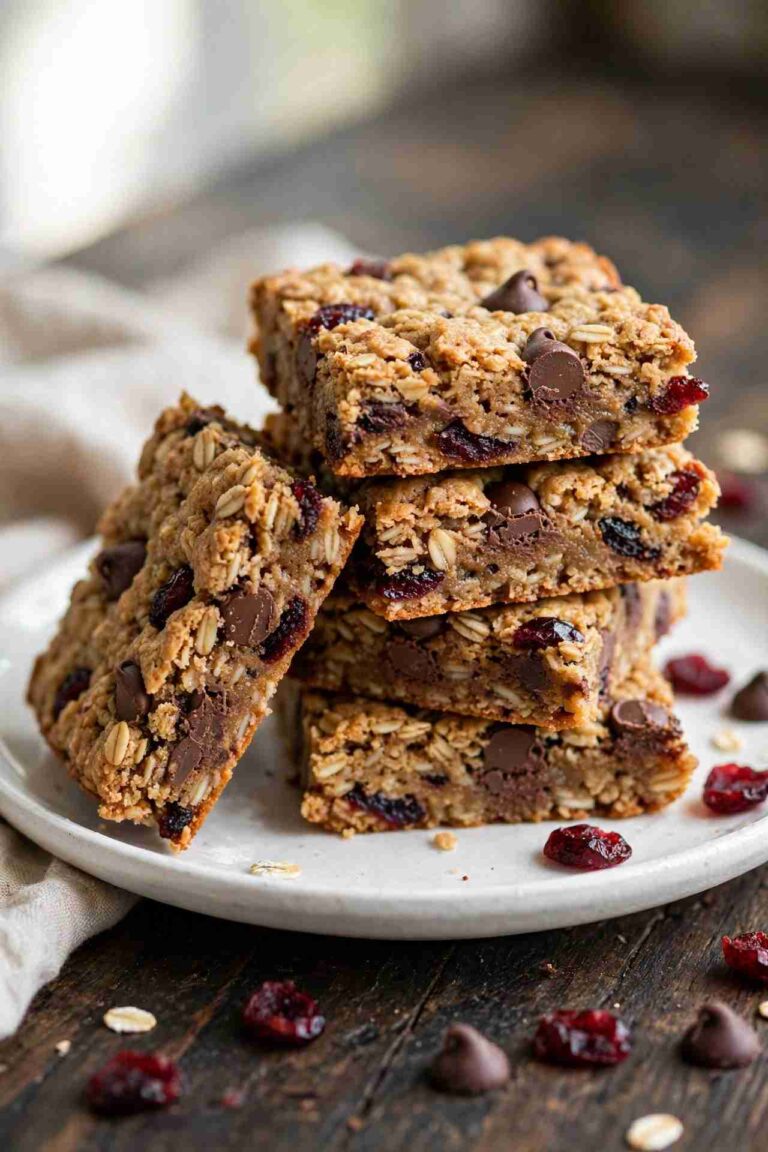
Fluffy Sheet Pan Pancakes with Golden Edges and No Flipping
Flipping pancakes one round at a time means the first stack is stone cold by the time the last one leaves the griddle. The cook ends up eating alone at the counter, syrup dripping, while everyone else has finished and wandered off. Mornings with a full table of hungry people turn into a shift of standing, flipping, and splattering grease across the stove. Most of us have been there on a Saturday, wondering why a simple breakfast has turned into a job that never ends.
Sheet pan pancakes fix that. You pour one batch of batter into a hot, buttered rimmed pan, slide it into the oven, and cut it into neat squares about 18 minutes later. The center stays soft and fluffy while the edges turn crisp and buttery, and all twelve servings come out at the same moment. The batter takes ten minutes to mix, and only one bowl, one whisk, and the pan get dirty. Even kids can help by pouring the batter and sprinkling the berries.
Why You’ll Love These Sheet Pan Pancakes
- Everyone eats together. Twelve squares finish at the same time, so nobody waits for a turn.
- Nothing to flip. The oven heats the pan from below and the air from above, so there is no underside to burn.
- Crisp edges, soft middle. Hot butter fries the bottom and rim while the center steams into a tender crumb.
- Easy cleanup. One bowl, one whisk, one pan.
- Freezer friendly. Cooked squares go from freezer to toaster in about two minutes, which covers rushed weekday mornings.
Read Also: Pancake Recipe
Ingredients You’ll Need
Recipe Timing
| Detail | Value |
|---|---|
| Servings | 12 squares |
| Difficulty | Easy |
| Course | Breakfast |
| Cuisine | American |
| Prep Time | 10 minutes |
| Cook Time | 18 minutes |
| Rest Time | 5 minutes |
| Total Time | 33 minutes |
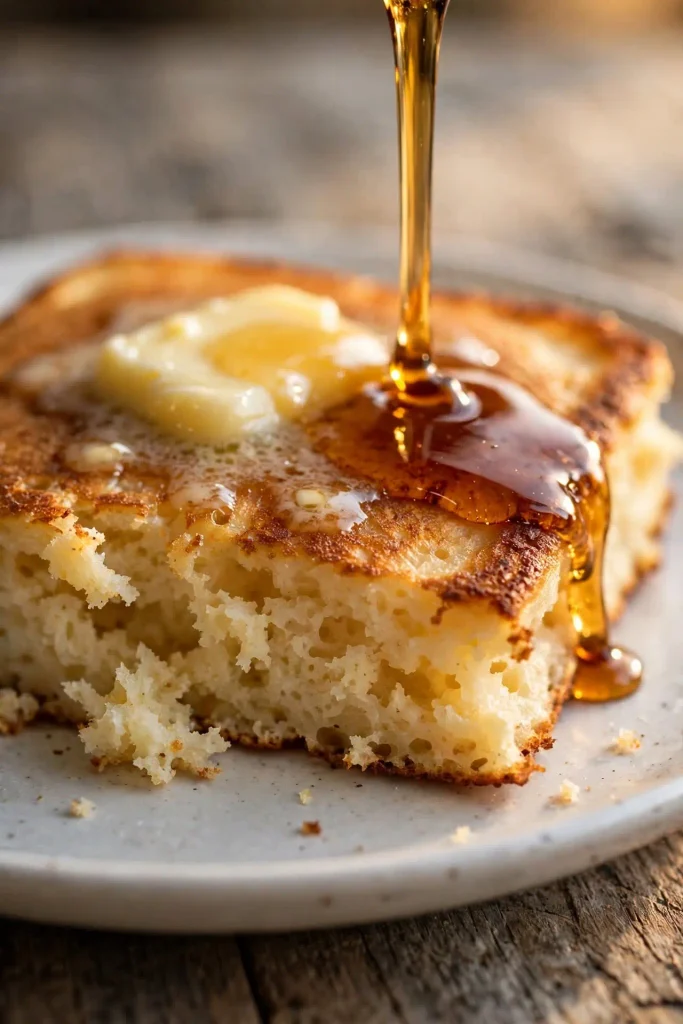
Start with fresh baking powder. Stir a spoonful into hot water, and if it doesn’t fizz hard, replace it, because weak baking powder is the most common reason for flat pancakes. Whole milk gives the richest flavor and the best browning. Take the milk and eggs out of the fridge 20 minutes before mixing so they blend smoothly with the melted butter instead of making it clump. If you add blueberries, use them straight from the freezer when you can, since frozen berries bleed less color into the batter than thawed ones.
- 3 cups (360 g) all-purpose flour: Builds the structure. A 1 to 1 gluten-free baking blend works as a swap.
- 3 tablespoons granulated sugar: Adds light sweetness and helps the edges brown. Light brown sugar works too.
- 1 tablespoon baking powder: Gives the lift. Don’t swap in baking soda unless you add an acid.
- 1/2 teaspoon fine salt: Sharpens the flavor so the pancakes don’t taste flat.
- 2 1/2 cups (600 ml) whole milk: Hydrates the flour and keeps the crumb tender. Unsweetened oat or soy milk works in equal amounts.
- 2 large eggs: Bind the batter and add richness.
- 1/3 cup (75 g) unsalted butter, melted, plus 2 tablespoons for the pan: Flavors the crumb, and the pan butter creates the crisp bottom. A neutral oil can replace it.
- 2 teaspoons alcohol-free vanilla flavoring: Adds a warm background note. The seeds of one vanilla bean also work.
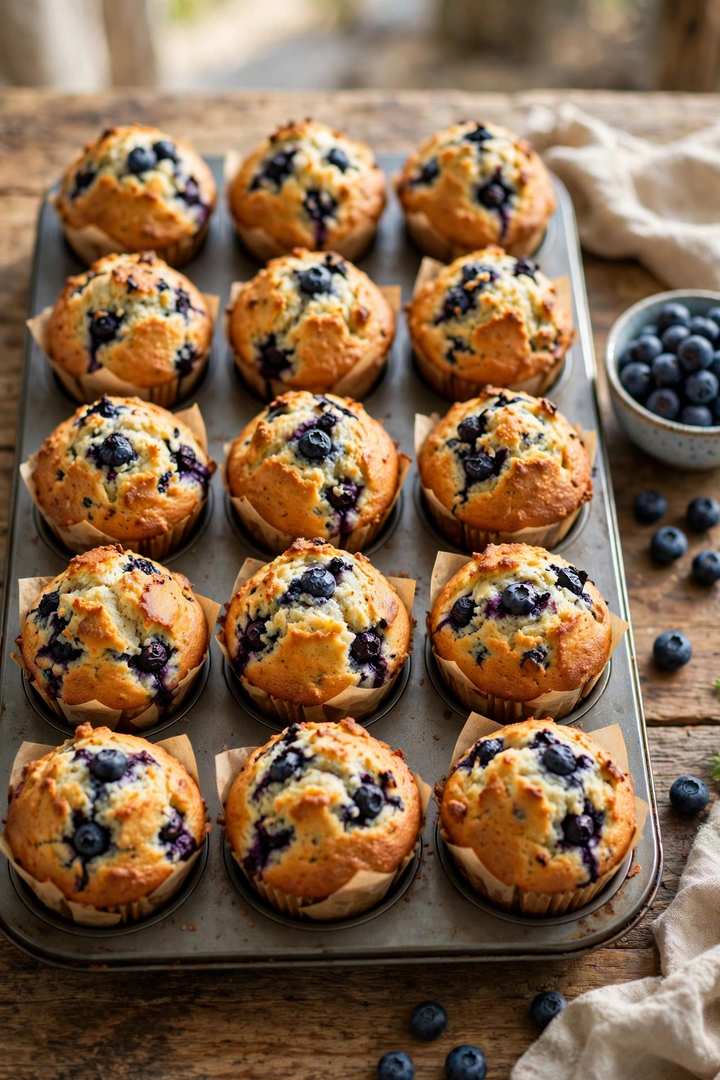
- 1 cup (150 g) blueberries, optional: Burst into juicy pockets as the pancakes bake.
- Maple syrup and butter, for serving.
Read Also: Banana Pancakes
Allergen & Dietary Disclosure
This recipe contains dairy (milk and butter), eggs, and gluten (wheat flour). For a dairy-free batch, use unsweetened oat or soy milk and swap the butter for melted dairy-free butter or a neutral oil. To make it egg-free, whisk in 1/2 cup unsweetened applesauce in place of the eggs, which gives a softer, slightly denser crumb. For gluten-free pancakes, use a 1 to 1 gluten-free flour blend and give the batter the full 5-minute rest. These swaps are not guaranteed safe for any specific allergy, so check every label and watch for cross-contact.
Equipment Needed
You need an 18 x 13 inch rimmed half sheet pan. The size sets the batter depth, and a smaller pan makes the batter too thick to cook through before the edges darken. A large bowl with a pouring spout lets you pour the batter in one smooth motion, and an offset spatula pushes the thick batter into the corners without tearing the butter layer. A wire rack keeps the bottom crisp while the pan cools, a pizza cutter slices clean squares without dragging the crumb, and an instant-read thermometer confirms the center is fully cooked.
Step-by-Step Directions
Step 1: Heat the Oven and Butter the Pan
Set a rack in the middle of the oven and heat it to 425°F (220°C). Put the 2 tablespoons of pan butter in the sheet pan and slide it in for about 2 minutes, until the butter melts and sizzles at the edges. Chef’s Note: hot butter fries the underside of the batter the moment it lands, which is where the crisp bottom comes from.
Step 2: Whisk the Dry Ingredients
In a large bowl, whisk the flour, sugar, baking powder, and salt for about 30 seconds, until you can no longer see white pockets of baking powder.
Step 3: Mix the Wet Ingredients
In a second bowl or jug, whisk the milk, eggs, melted butter, and vanilla flavoring until the mixture looks even and pale yellow. Wash your hands and tools after handling raw eggs, and don’t taste the raw batter.
Step 4: Combine and Rest the Batter
Pour the wet mixture into the dry bowl and fold with a whisk or spatula for 12 to 15 strokes, just until the dry flour disappears. Leave the batter alone for 5 minutes, until it thickens and small bubbles appear on the surface. Chef’s Note: a few small lumps are welcome. Stirring until smooth builds gluten, and that is what turns tender pancakes rubbery.
Step 5: Pour and Spread
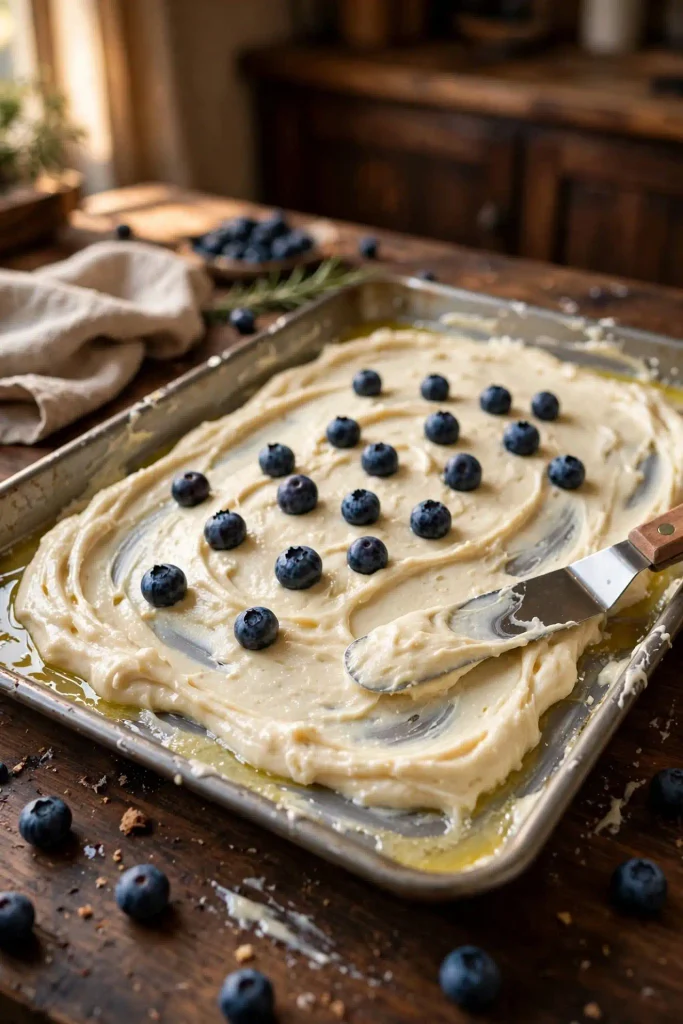
Carefully pull the hot pan from the oven and pour in the batter. Nudge it into the corners with an offset spatula until it forms an even layer, then scatter the blueberries over the top and press them in lightly so they stay put.
Step 6: Bake Until Puffed and Golden
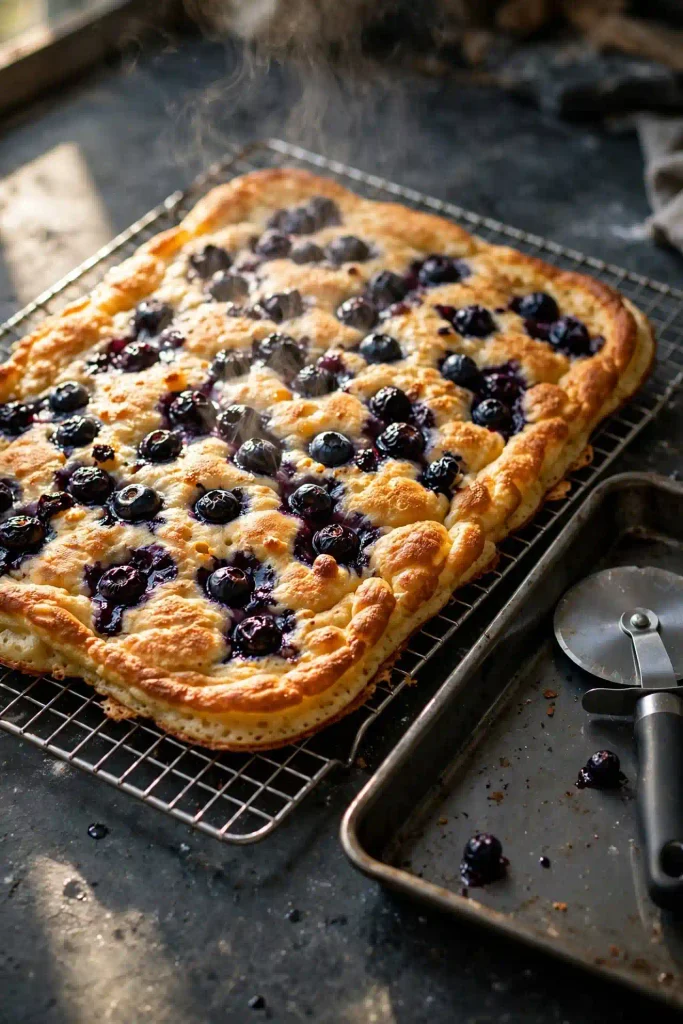
Bake for 15 to 18 minutes, until the top looks puffed and dry, the edges are deep golden, and a toothpick in the center comes out clean. An instant-read thermometer in the middle should read at least 160°F (71°C), since the batter contains eggs. Chef’s Note: if your oven runs hot on one side, rotate the pan at the 10-minute mark so the edges brown evenly.
Step 7: Cool Briefly and Cut
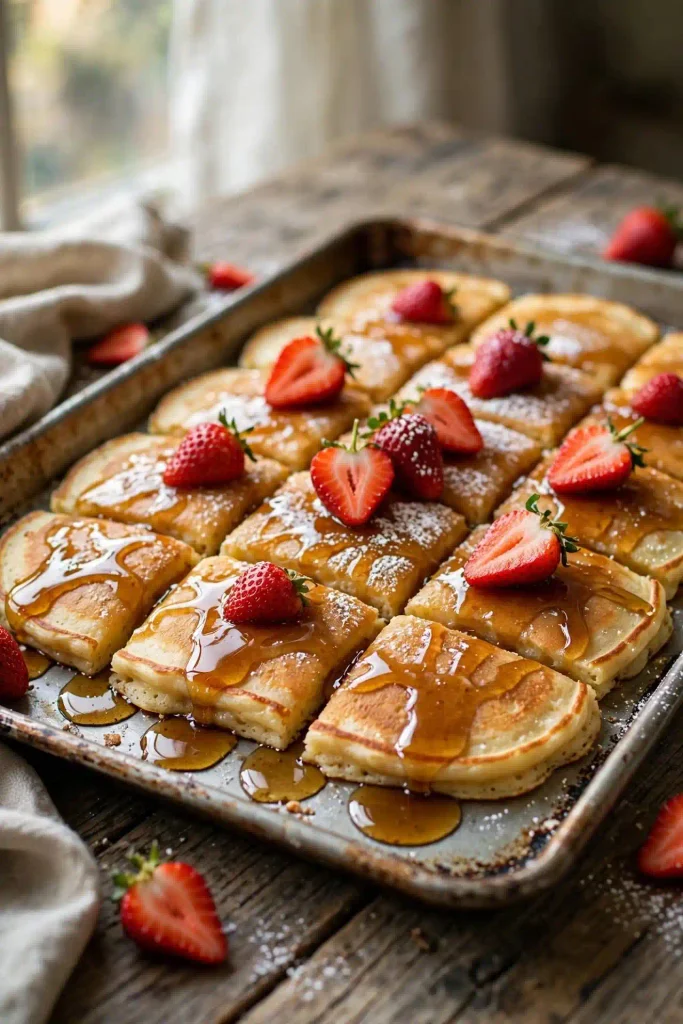
Set the pan on a wire rack for 3 minutes. Cut a grid of 3 by 4 with a pizza cutter, lift the squares out with a thin spatula, and serve while warm.
Common Mistakes & Troubleshooting
| Problem | Cause | Solution |
|---|---|---|
| Dense, rubbery squares | Batter was overmixed | Fold only until the flour disappears and leave small lumps |
| Flat pancakes with little rise | Old baking powder, or batter sat too long before baking | Test the baking powder and bake right after the 5-minute rest |
| Brown edges but gummy center | Pan too small, batter too thick, or oven too hot | Use an 18 x 13 inch pan, or drop the oven to 400°F (200°C) and add a few minutes |
| Pancakes stick to the pan | Pan wasn’t hot or buttered enough | Melt the butter in the preheated pan and swirl it to the edges |
| Pale, soft top | Rack too low or oven runs cool | Bake on the middle rack and check with an oven thermometer |
Variations & Substitutions
- Lemon blueberry: Add the zest of one lemon to the dry mix for a brighter flavor.
- Chocolate chip: Scatter 3/4 cup mini chocolate chips over the batter in place of the berries.
- Cinnamon apple: Add 1 teaspoon cinnamon to the flour and top the batter with thin peeled apple slices.
- Banana: Mash one ripe banana into the wet ingredients and reduce the milk by 1/4 cup.
- Dairy-free: Use plant milk and dairy-free butter or oil.
- Gluten-free: Use a 1 to 1 gluten-free flour blend.
Serving Suggestions
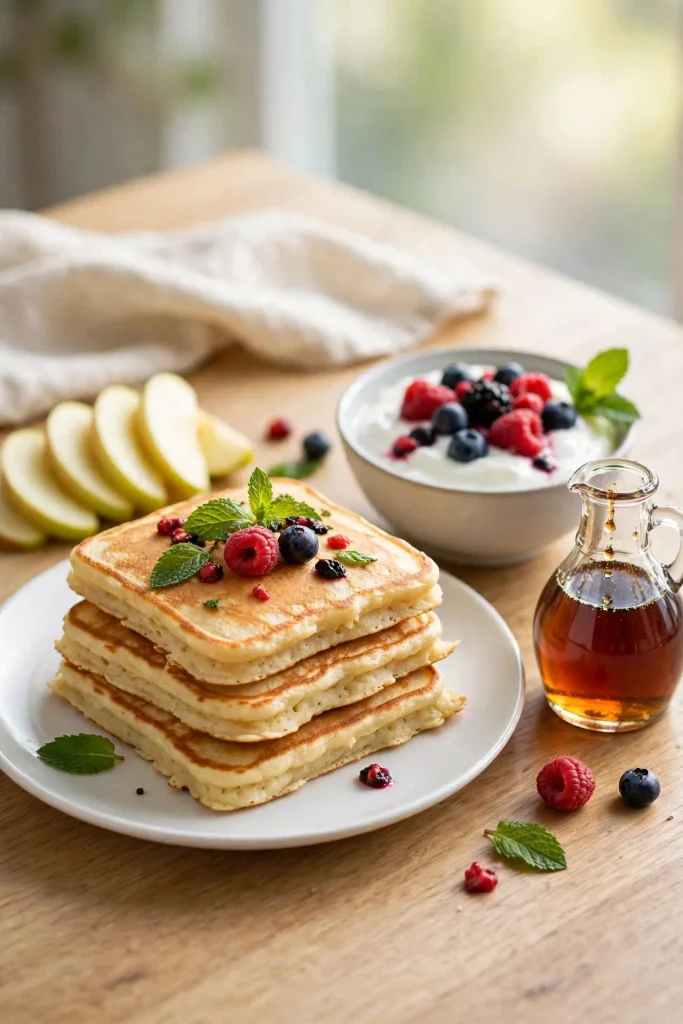
- Warm maple syrup and a pat of butter on each square.
- Greek yogurt with fresh berries for a lighter plate.
- Sliced bananas with a drizzle of honey.
- Crisp apple slices and a handful of nuts on the side, if nobody at the table has a nut allergy.
- Scrambled or soft-boiled eggs for a more filling brunch.
- Hot tea, orange juice, or cold milk to drink.
Tips for the Best Results
- Weigh the flour. A cup scooped straight from the bag can hold noticeably more flour than a spooned and leveled one, and the extra flour makes the pancakes dry.
- Don’t skip the rest. Five minutes lets the flour absorb the milk, so the batter spreads evenly and bakes up taller.
- Space the add-ins. Berries and chocolate chips cook best in a single layer, so scatter them instead of piling them in one spot.
- Cool before cutting. Three minutes lets the steam settle, so the squares hold their shape.
- Use the middle rack. The top browns evenly without the bottom scorching.
Storage Tips
Refrigerator
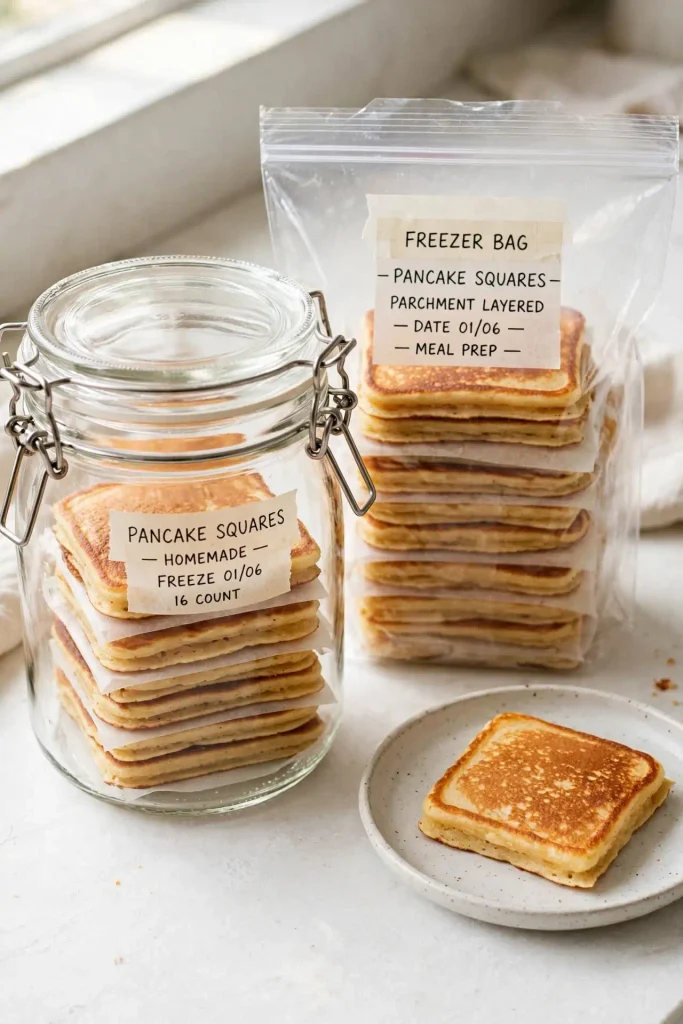
Cool the pancakes completely, then store them in an airtight container for up to 4 days. Put parchment between layers so the squares don’t stick together.
Freezer
Freeze the squares in a single layer on a tray for about an hour, then move them to a freezer bag. They keep well for up to 2 months.
Reheating
Toast frozen squares for about 2 minutes. Microwave refrigerated ones for 30 to 40 seconds, or warm them covered with foil in a 350°F (175°C) oven for 8 to 10 minutes. For a faster morning, whisk the dry ingredients together up to a week ahead and keep them in a sealed jar.
Nutrition Information
Per serving (1 of 12 squares, plain, without toppings):
- Calories: 210
- Protein: 6 g
- Carbohydrates: 29 g
- Fiber: 1 g
- Sugar: 6 g
- Fat: 8 g
- Saturated Fat: 4.5 g
- Cholesterol: 50 mg
- Sodium: 290 mg
- Vitamin C: 0 mg
- Calcium: 140 mg
- Iron: 1.8 mg
- Potassium: 130 mg
Nutrition values are approximate and may vary based on brands and portion sizes.
Why This Recipe Works
Expertise: An 18 x 13 inch pan spreads this batter to roughly a third of an inch, thin enough to cook through in 15 to 18 minutes at 425°F (220°C). A thicker layer needs a longer bake, and by then the edges have gone past crisp into dry.
Authoritativeness: The ratio of 3 cups flour to 2 1/2 cups milk and 1 tablespoon baking powder gives a batter thick enough to hold blueberries in place yet loose enough to spread on its own. The times and temperatures here are matched to that pan and that batter.
Read Also: Pumpkin Pancakes
Frequently Asked Questions
Can I make sheet pan pancakes ahead of time?
Yes. Bake the pancakes, cool them fully on a rack, then keep them in an airtight container in the fridge for up to four days. For longer storage, freeze the squares in a single layer first, then bag them. I don’t recommend mixing the batter the night before, because baking powder starts working once it gets wet and the pancakes bake up flatter.
Why are my sheet pan pancakes dense?
Overmixing is the usual cause. Stirring until the batter is perfectly smooth builds gluten, which makes pancakes chewy instead of tender. Fold just until the dry flour disappears and leave a few small lumps. Old baking powder is the second suspect, so test it in hot water. Scooping flour straight from the bag can also pack in too much, so spoon and level it or use a scale.
Can I use a different pan size?
A standard half sheet pan, 18 x 13 inches, gives the right depth. A quarter sheet pan makes the batter too deep, so the edges brown before the center sets. If you only have a 9 x 13 inch baking dish, halve the recipe, bake at the same temperature, and check the center at 15 minutes. You lose some of the crisp edge, but the pancakes still taste great.
How do I know when sheet pan pancakes are done?
Look for four signs: the surface is puffed and dry, the edges are deep golden, a toothpick in the center comes out clean, and the middle springs back when pressed lightly. For a firm number, an instant-read thermometer in the center should read at least 160°F (71°C) because the batter contains eggs. Most ovens get there in 15 to 18 minutes, so start checking at 14.
Can I make these without eggs or dairy?
Yes. For dairy-free, use unsweetened oat or soy milk and swap the butter for melted dairy-free butter or a neutral oil. For egg-free, whisk in 1/2 cup unsweetened applesauce, which adds moisture but gives a softer, slightly denser crumb. If you’re cooking for someone with a serious allergy, check every label, since cross-contact can happen even with ingredients that seem safe.
Can I use oil instead of butter?
You can. Use the same amount of a neutral oil, such as sunflower or canola, in the batter and 2 tablespoons in the pan. The pancakes stay tender and the edges still crisp up, but you lose the buttery flavor. If you want both, brown the butter on the stove first and let it cool slightly before whisking it into the milk and eggs.
Conclusion
The best thing about sheet pan pancakes is where you end up standing. Instead of hovering over a griddle while everyone else eats, you’re at the table with a hot square on your own plate. Once you’ve baked one batch, the routine is easy to repeat: mix, pour, bake, cut. The pan also gives you room to experiment, since fruit, chocolate, and spices all behave well on it. Keep a bag of squares in the freezer and a weekday breakfast takes two minutes.
If you loved this recipe, save it to your breakfast Pinterest board so you can find it easily later!
Sheet Pan Pancakes
Ingredients
Method
- Place a rack in the middle of the oven and set it to 425°F (220°C). Melt 2 tablespoons butter in an 18 x 13 inch rimmed sheet pan inside the oven, about 2 minutes, then swirl to coat.
- Stir the flour, sugar, baking powder, and salt together in a large bowl until evenly blended.
- In a separate bowl, beat the milk, eggs, melted butter, and vanilla flavoring until uniform. Wash your hands after handling raw eggs and avoid tasting the raw batter.
- Tip the wet mixture into the dry ingredients and fold gently, about 12 to 15 strokes, until no dry flour shows. Small lumps are fine. Let the batter stand for 5 minutes.
- Remove the hot pan, pour in the batter, and spread it into the corners. Dot with blueberries and press them in lightly.
- Bake for 15 to 18 minutes, until the top is puffed and dry, the edges are deep golden, and a toothpick comes out clean. The center should reach at least 160°F (71°C).
- Let the pan rest on a wire rack for 3 minutes, then slice into 12 squares and serve warm with butter and syrup.
Notes
- Weigh the flour for the most reliable texture.
- Check your baking powder by dropping a spoonful into hot water. It should fizz hard.
- Cool leftovers fully before storing: 4 days in the fridge or 2 months in the freezer.
- If using a 9 x 13 inch dish, halve the recipe and check the center at 15 minutes.