Easy German Pancakes in 40 Minutes: Puffy, Golden, Custardy
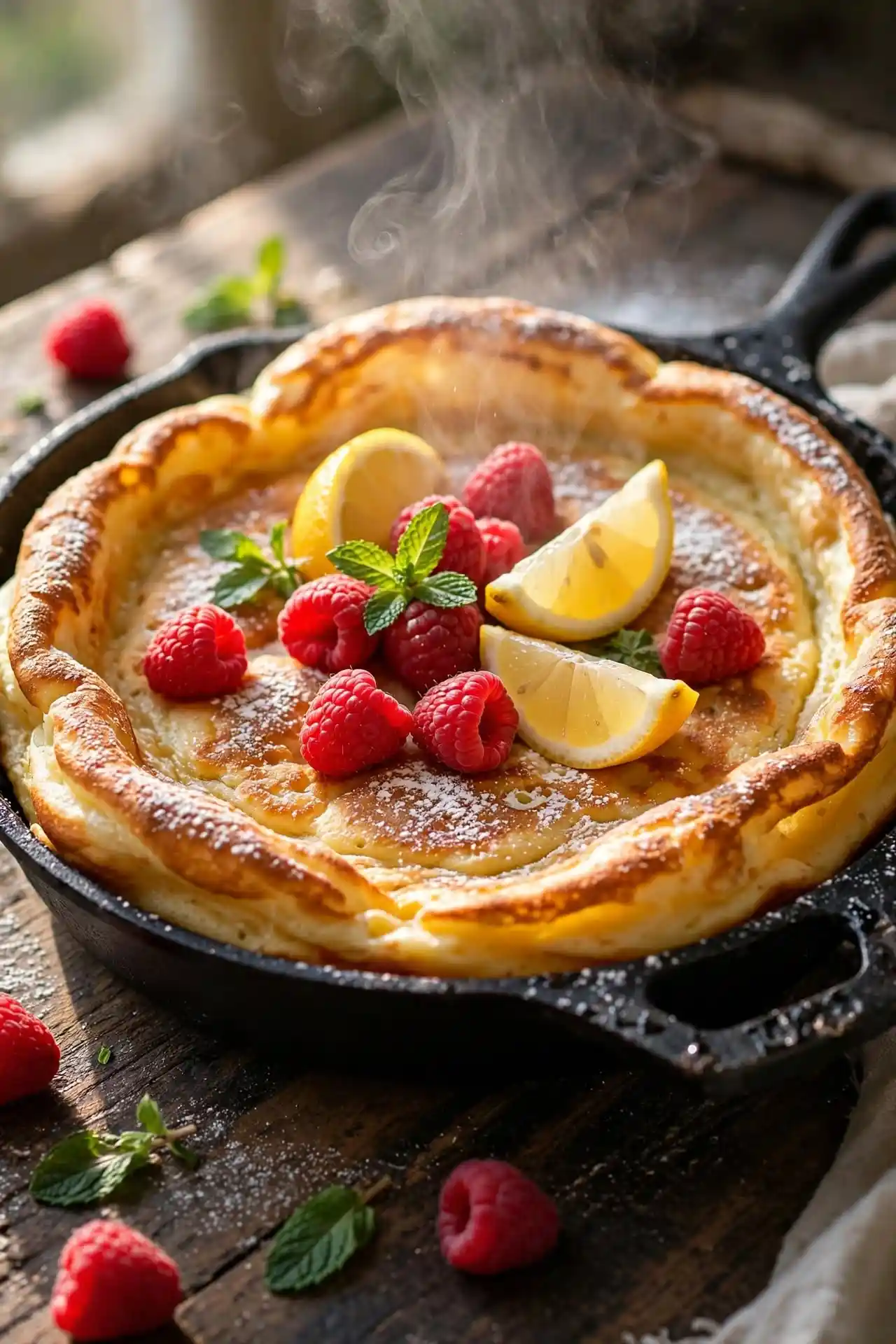
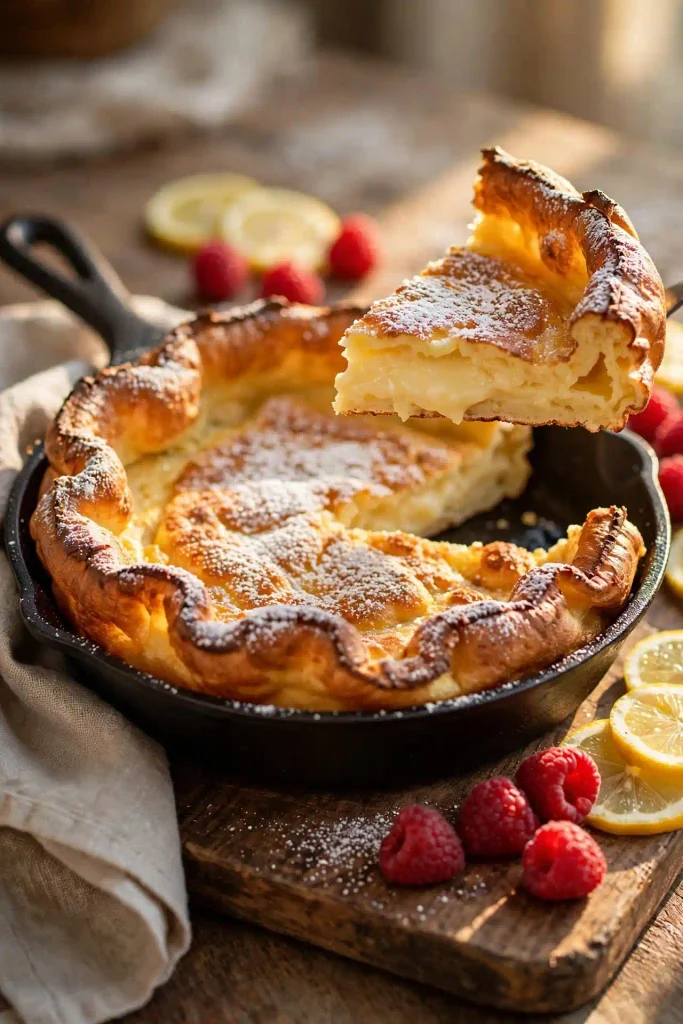
Few breakfasts make an entrance like this one. You slide a plain-looking skillet of batter into the oven, and about twenty minutes later it has climbed the walls of the pan in golden, rippled peaks. The middle stays soft and pale, the edges turn crisp, and the whole thing begs for lemon juice and a snowfall of powdered sugar before it settles.
German pancakes are one big oven-baked pancake made from a blender batter of eggs, milk, and flour. This recipe serves 4 wedges and takes 40 minutes in total, including a short rest that lets the batter puff higher. Only about 10 minutes of that needs your attention, so you are free to slice fruit and pour coffee while the oven does the work.
Why You’ll Love These German Pancakes
- Blender batter: Everything goes in at once, so there’s no lumpy flour to fight and one less bowl to wash.
- Dramatic puff: Steam from the eggs and milk lifts the edges the moment the batter hits a hot skillet.
- Pantry ingredients: Eggs, milk, flour, butter, sugar, and salt are all you need for the base.
- No flipping: The oven does the cooking, so you’re free to slice fruit or pour coffee.
- Flexible toppings: Lemon and berries make it sweet, while cheese and herbs make it savory.
Read Also: Pancake Recipe
Ingredients You’ll Need
Recipe Timing
| Detail | Info |
|---|---|
| Servings | 4 wedges |
| Difficulty | Easy |
| Course | Breakfast |
| Cuisine | German-American |
| Prep Time | 10 minutes |
| Cook Time | 20 minutes |
| Rest Time | 10 minutes |
| Total Time | 40 minutes |
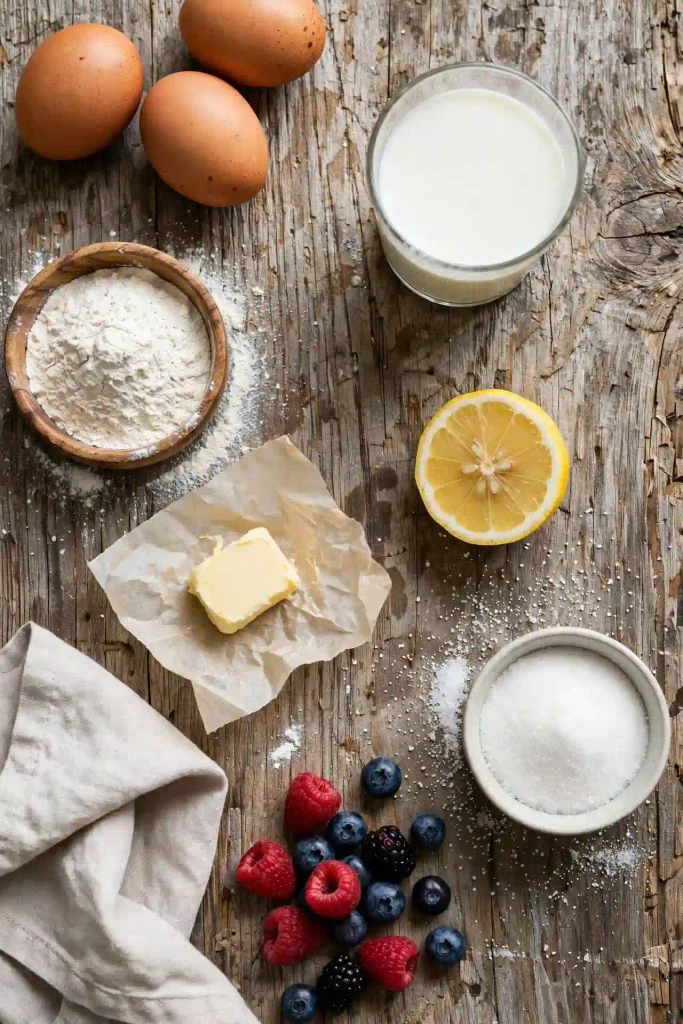
Selection tips: Use eggs and milk at room temperature. Cold ingredients chill the hot butter and skillet, and the pancake rises less. If you forgot, set the eggs in warm water for 5 minutes and microwave the milk for 15 to 20 seconds. Whole milk gives the richest custardy center. Unsalted butter lets you control the salt.
- 3 large eggs: They create the steam and structure that make the pancake climb. There’s no reliable swap here, so this recipe depends on real eggs.
- 3/4 cup (180 ml) whole milk: It thins the batter so it can puff and gives the center its soft, custardy bite. 2% milk works, and unsweetened oat milk is the dairy-free option.
- 3/4 cup (95 g) all-purpose flour: It sets the walls of the puff. A 1:1 gluten-free flour blend works, with a slightly flatter result.
- 1 tablespoon granulated sugar: It adds light sweetness and helps the edges brown. Leave it out for a savory version.
- 1/2 teaspoon fine salt: It keeps the eggy flavor from tasting flat.
- 1 teaspoon alcohol-free vanilla flavoring: It adds a warm, bakery-style aroma without any sharp edge.
- 3 tablespoons (42 g) unsalted butter: It melts in the skillet and fries the underside, giving the pancake its crisp, golden base. Refined coconut oil or dairy-free butter can replace it.
- 1 lemon, cut into wedges: The sharp juice cuts through the rich, eggy center. Orange wedges also work.
- 2 tablespoons powdered sugar: For dusting on top just before serving.
- 1 cup (150 g) fresh berries: Strawberries, blueberries, or raspberries add juicy contrast. Sliced peaches or bananas are good too.
Read Also: Sourdough Pancakes
Allergen & Dietary Disclosure
This recipe contains eggs, dairy (milk and butter), and gluten from wheat flour.
- Dairy-free: Use unsweetened oat milk and dairy-free butter or refined coconut oil.
- Gluten-free: Use a 1:1 gluten-free baking blend. Expect a slightly lower puff and a softer edge.
- Egg-free: Not recommended. The eggs create the lift, and common substitutes produce a flat, dense bake.
This is general guidance only, and the recipe isn’t guaranteed safe for any specific allergy. Always check your ingredient labels.
Equipment Needed
- 10-inch oven-safe skillet: Cast iron holds heat best, which is what drives the fast rise. A smaller pan makes a taller, doughier pancake, and a larger one makes a flat one.
- Blender: It aerates the batter and removes lumps in 20 to 30 seconds.
- Thick oven mitts: The skillet is scorching when you add the butter and batter, so protect both hands.
- Wooden trivet or heatproof board: It gives the hot skillet a safe place to land at the table.
- Thin spatula: It lifts the wedges without tearing the soft center.
Step-by-Step Directions
Step 1: Heat the Oven and Skillet
Set a rack in the middle of the oven, put the empty skillet on it, and heat the oven to 425°F (220°C). Leave the skillet in there for at least 10 minutes so it’s thoroughly hot.
Chef’s Note: A blazing skillet is what makes the batter leap upward in the first minutes. If your oven takes longer than 10 minutes to reach temperature, let the skillet heat the whole time.
Step 2: Blend the Batter
Add the eggs, milk, flour, sugar, salt, and vanilla to the blender. Blend for 20 to 30 seconds until the batter is smooth, pale, and a little frothy.
Chef’s Note: Wash your hands, the blender jug, and any surfaces that touched raw egg with warm soapy water.
Step 3: Let the Batter Rest
Leave the blended batter on the counter while the skillet finishes heating, about 10 minutes. Tiny bubbles on the surface mean it’s ready.
Step 4: Melt the Butter
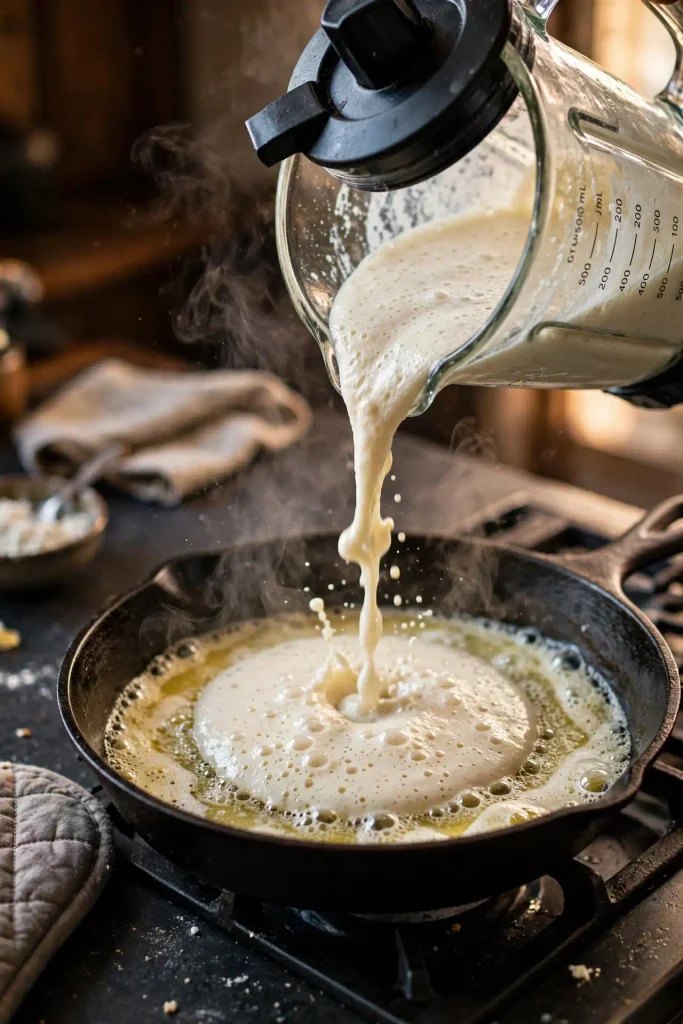
Using thick mitts, pull the hot skillet out and set it on a heatproof surface. Drop in the butter and swirl until it melts, sizzles, and coats the bottom and sides, about 20 to 30 seconds.
Chef’s Note: Butter on the sides of the pan helps the batter climb the walls and gives the edges their crisp, golden ruffle.
Step 5: Pour and Bake
Pour the batter into the center of the buttery skillet, then slide it straight back onto the middle rack. Bake for 18 to 20 minutes without opening the door. It’s done when the edges have climbed high, the whole top is deep golden, and the center looks dry and set rather than glossy.
Chef’s Note: Opening the oven early releases the steam that holds the puff up. Look through the oven window instead.

Step 6: Dress and Serve
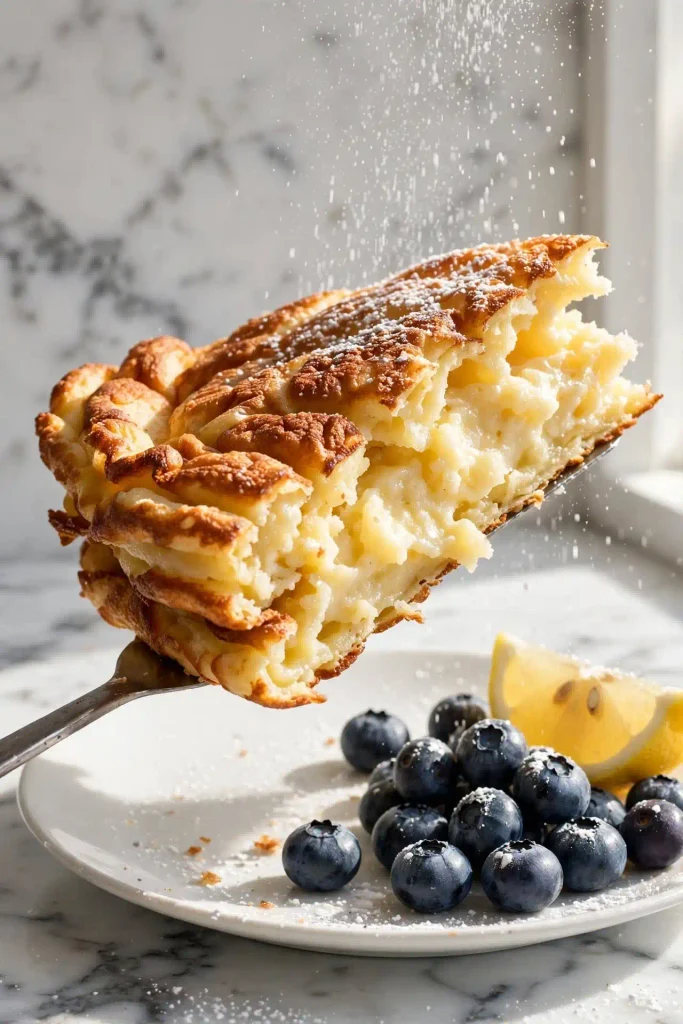
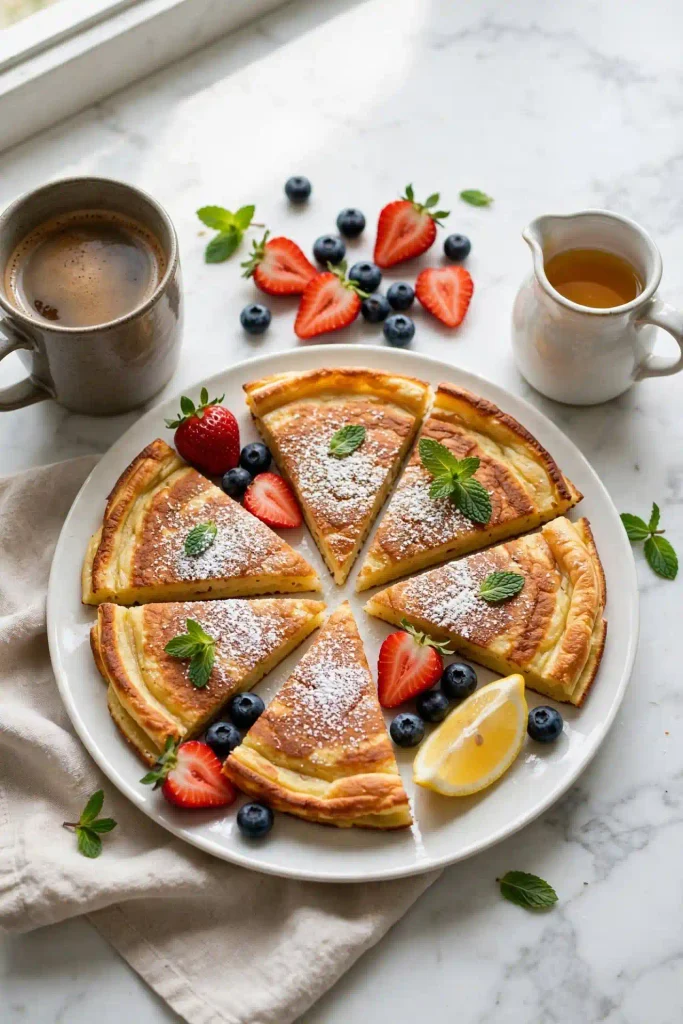
Carry the skillet to the table on the trivet. Squeeze lemon juice over the top, dust with powdered sugar, scatter the berries, and cut into four wedges while it’s still warm.
Chef’s Note: The pancake starts to settle within a minute or two. Top it right away to enjoy the tallest puff.
Common Mistakes & Troubleshooting
| Problem | Cause | Solution |
|---|---|---|
| Flat pancake with little rise | Skillet not hot enough, or cold eggs and milk | Preheat the skillet at least 10 minutes and use room-temperature ingredients |
| Puffed, then collapsed in the oven | Oven door opened early | Keep the door closed for the full 18 minutes |
| Soggy or wet center | Pulled out too soon | Bake 2 to 3 more minutes until the center looks set and dry |
| Pancake sticks to the pan | Not enough butter, or skillet not preheated | Swirl the butter up the sides and pour into a hot pan |
| Dark, bitter bottom | Rack set too low, or a thin, dark pan | Bake on the middle rack and use a heavy skillet |
Variations & Substitutions
- Apple cinnamon: Sauté 1 thinly sliced apple in the butter with 1/2 teaspoon cinnamon for 2 minutes, then pour the batter over the apples.
- Savory cheddar and chives: Skip the sugar and vanilla, add 1/4 teaspoon black pepper to the batter, and sprinkle 1/2 cup shredded cheddar over the top for the last 5 minutes.
- Lemon poppy seed: Blend in the zest of one lemon and 1 teaspoon poppy seeds.
- Cardamom orange: Add 1/4 teaspoon ground cardamom and a teaspoon of orange zest to the batter.
- Gluten-free German pancakes: Use a 1:1 gluten-free flour blend and let the batter rest a full 10 minutes so the flour hydrates.
Serving Suggestions
- Squeeze fresh lemon over warm German pancakes and add a snowy dusting of powdered sugar.
- Spoon macerated strawberries or warm blueberry compote into the center.
- Add a spoonful of plain Greek yogurt for a tangy contrast.
- Drizzle with maple syrup or honey.
- Pair with a hot cup of coffee or tea for a slow weekend brunch.
- Serve the savory version with a green salad for a light lunch.
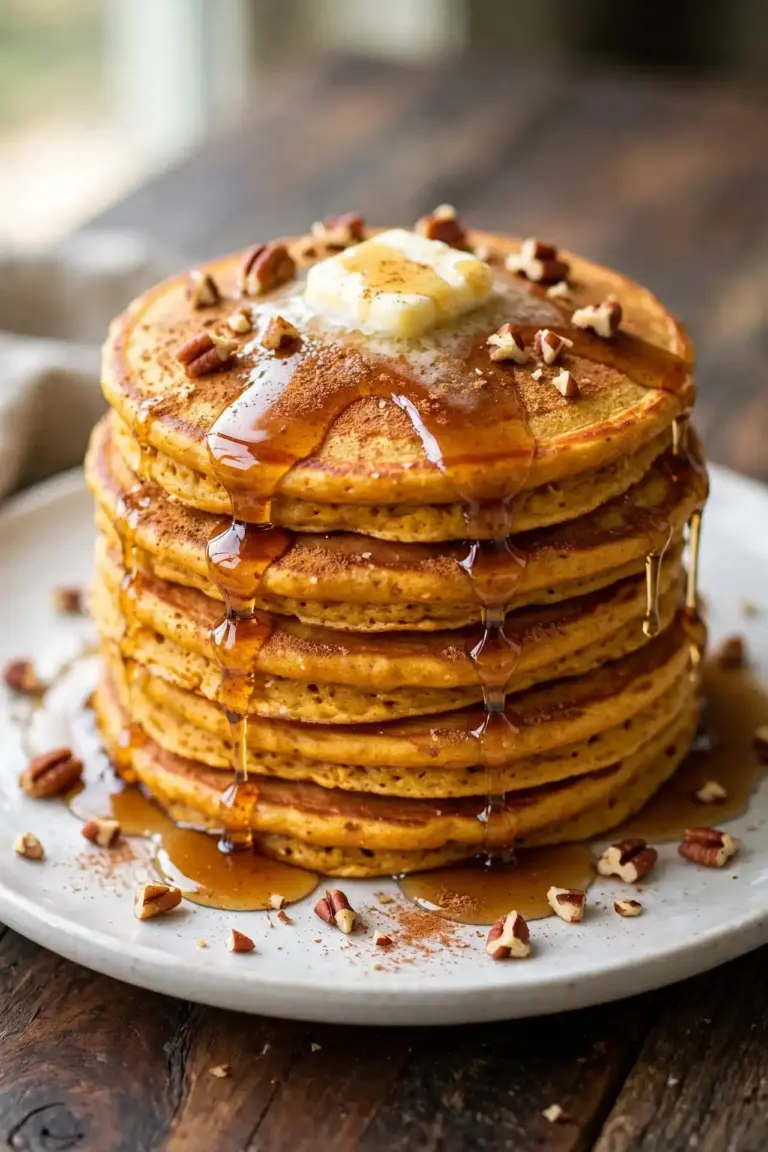
When autumn comes around, Pumpkin Pancakes take this same brunch slot at the table.
Tips for the Best Results
- Warm your skillet fully: A pan that has sat in the oven for 10 minutes sizzles on contact and drives the rise.
- Use room-temperature eggs and milk: They blend into a smoother batter and don’t cool the butter.
- Keep the door shut: Peeking drops the oven temperature and releases the steam that holds the puff.
- Match the pan size: A 10-inch skillet gives German pancakes tall edges and a tender middle. A 9 x 13 inch dish gives a wider, flatter pancake that needs a doubled recipe.
- Serve immediately: German pancakes stand tallest right out of the oven, so have your toppings ready before you bake.
Storage Tips
Refrigerator
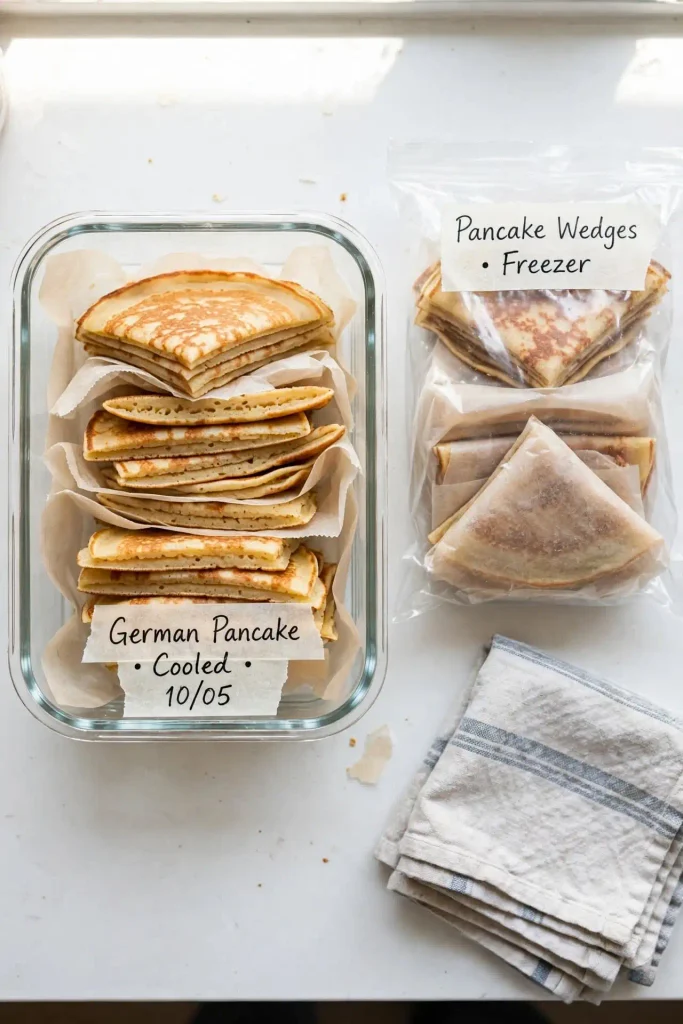
Let leftover wedges cool completely, then store them in an airtight container with parchment between layers. They keep for up to 3 days. The batter itself can also be blended and refrigerated for up to 12 hours. Bring it to room temperature for 30 minutes and re-blend briefly before baking.
Freezer
Wrap each cooled wedge in parchment and place the wedges in a freezer bag. They hold for up to 2 months. Thaw overnight in the fridge before reheating.
Reheating
Warm wedges on a baking sheet in a 350°F (175°C) oven for 8 to 10 minutes, until hot in the middle. A single wedge takes 30 to 45 seconds in the microwave, though it will be softer than oven-reheated ones.
Nutrition Information
Per serving of these German pancakes (1 of 4 wedges, without toppings):
- Calories: 255
- Protein: 9 g
- Carbohydrates: 23 g
- Fiber: 1 g
- Sugar: 5 g
- Fat: 14 g
- Saturated Fat: 7 g
- Cholesterol: 174 mg
- Sodium: 360 mg
- Vitamin C: 1 mg
- Calcium: 80 mg
- Iron: 1.5 mg
- Potassium: 150 mg
Nutrition values are approximate and may vary based on brands and portion sizes.
Why This Recipe Works
The whole rise depends on heat meeting batter fast. The skillet sits in a 425°F (220°C) oven for at least 10 minutes before anything touches it, so when the batter lands in the sizzling butter, the liquid in the eggs and milk turns to steam almost at once. That steam has nowhere to go but up, and it pushes the thin batter up the sides of the pan, where the heat sets it into crisp, golden walls around a soft center.
The short rest matters more than it looks. Five to ten minutes on the counter lets the flour hydrate and the froth from the blender settle, so the batter pours evenly and bakes up smooth and custardy instead of tough. After that the rule is simple: keep the oven door closed for the full bake. Opening it lets the steam escape and drops the temperature, and the puff falls before it has had time to set.
Read Also: Fluffy Ricotta Pancakes
Frequently Asked Questions
Can I make German pancakes ahead of time?
Partly. The batter keeps in the fridge for up to 12 hours, so you can blend it the evening before. Let it sit on the counter for 30 minutes, re-blend briefly, then bake it in a freshly heated skillet. A fully baked pancake loses its puff within minutes, though leftover wedges reheat well in a 350°F (175°C) oven for 8 to 10 minutes.
Why did my German pancake not puff?
Usually the skillet or the ingredients weren’t hot or warm enough. The batter needs to hit sizzling butter in a skillet that has preheated for at least 10 minutes at 425°F (220°C). Cold eggs and milk cool the pan on contact, and opening the oven door early lets out the steam that lifts the edges. Fix those three things and the rise follows.
Can I make German pancakes without a blender?
Yes. Whisk the eggs and milk hard for about a minute until frothy, then whisk in the flour, sugar, salt, and vanilla a little at a time so no lumps form. Let the batter sit for 5 minutes. A blender is faster and gives a smoother, airier batter, but a whisk and a bit of patience produce a very similar result.
How do I know when German pancakes are done?
Look for edges that have climbed the skillet walls, a deep golden color across the top, and a center that feels set instead of wet when you gently press it. Most ovens need 18 to 20 minutes at 425°F (220°C). If the middle still looks glossy, give it 2 more minutes with the door closed. The puff will settle once it leaves the oven.
Are German pancakes safe for people with allergies?
Not automatically. The recipe contains eggs, dairy, and wheat gluten. You can use oat milk, dairy-free butter, or a 1:1 gluten-free flour blend, though the pancake may rise a little less. The eggs do most of the lifting and have no reliable substitute here. Always read labels, and check with a doctor first if an allergy is serious.
Is a German pancake the same as a Dutch baby?
Essentially, yes. Both names describe the same oven-baked, puffed pancake, and recipes under either name use nearly identical batters. The difference is mostly regional habit rather than a change in method. Neither is the same as a crepe, which is cooked thin on the stovetop and folded or rolled.
Conclusion
Once you’ve seen a batter climb the sides of a skillet, German pancakes stop feeling like a project and start feeling like a trick you can repeat any morning. The ingredients are plain, the blender does the mixing, and the oven handles the rest while you slice fruit. Keep the lemon and powdered sugar for the classic version, then try apple cinnamon or a cheddar and chive batch once the base feels familiar. When the sourdough starter needs using up instead, our Sourdough Pancakes are the other weekend bake worth knowing.
Two things matter most: a properly hot skillet and a closed oven door. Get those right and you’ll have tall, golden German pancakes with a soft, custardy middle in 40 minutes.
If you loved this recipe, save it to your breakfast Pinterest board so you can find it easily later!
Easy German Pancakes
Ingredients
Method
- Put a 10-inch oven-safe skillet on the middle rack and heat the oven to 425°F (220°C). Keep the skillet inside for 10 minutes or more.
- Blend the eggs, milk, flour, sugar, salt, and vanilla for about 30 seconds, until the batter looks frothy and smooth.
- Let the batter rest for 10 minutes while the skillet finishes heating.
- Wearing thick oven mitts, move the hot skillet to a heatproof surface. Add the butter and swirl it around the base and walls until it sizzles.
- Pour the batter into the middle of the skillet and return it to the oven right away.
- Bake 18 to 20 minutes without opening the door, until the sides tower, the top is deep golden, and the center looks dry.
- Squeeze lemon over the top, dust with powdered sugar, add the berries, and cut into 4 wedges.
Notes
- Room-temperature eggs and milk help the pancake rise higher.
- The pancake settles shortly after leaving the oven, which is normal.
- Refrigerate leftovers up to 3 days or freeze wrapped wedges up to 2 months.
- The batter can be refrigerated up to 12 hours. Re-blend before using.