
Easy Breakfast Sandwich with Soft Eggs and Melty Cheese
I used to grab a drive-thru sandwich on rushed mornings, and it was always the same story: a rubbery egg, a squashed bun, and cheese that never quite melted. So I started making my own, and the fix turned out to be simple.
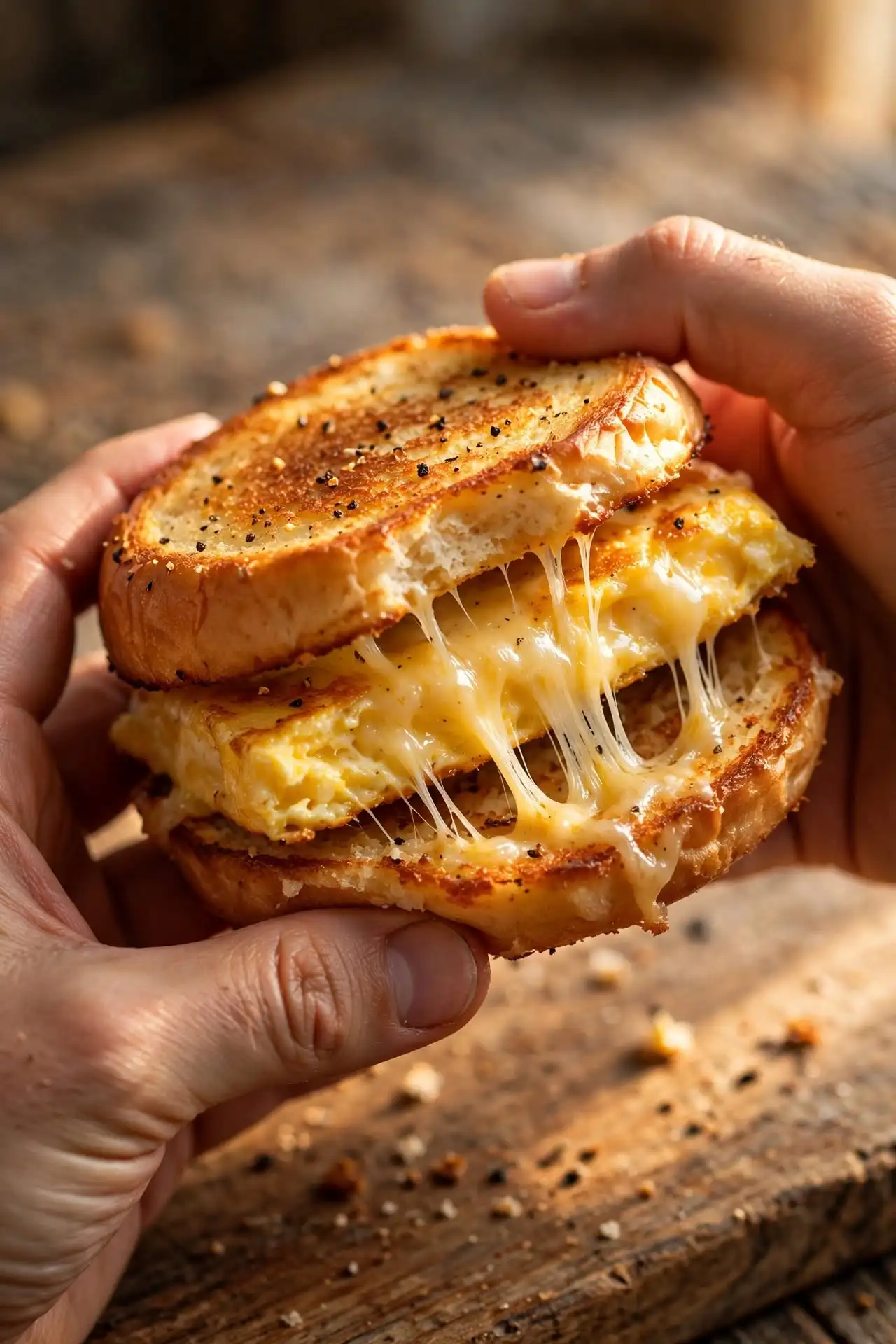
This breakfast sandwich uses a fluffy egg patty baked in a muffin tin, sharp cheddar that melts under a quick broil, and a toasted, buttered English muffin. You can make four in about 27 minutes, and every part reheats well. It suits school mornings, early shifts, and slow weekend brunches. Below you’ll find the egg method that stays tender, the layering order that keeps the bread crisp, and the freezer steps for a grab-and-go stash.
Why You’ll Love This Breakfast Sandwich
- Fluffy egg, never rubbery. A splash of milk and a gentle oven bake keep the egg soft and evenly shaped.
- Bread stays crisp. Buttering and toasting the muffin first makes a barrier against steam.
- Fully make-ahead. Wrap and freeze a batch on Sunday, then reheat in minutes on busy mornings.
- Hands-off cooking. The eggs bake while you toast the bread, so there is no pan to babysit.
- Easy to customize. Swap the cheese, add spinach, or switch the bread without changing the method.
Read Also: Freezer Breakfast Sandwiches
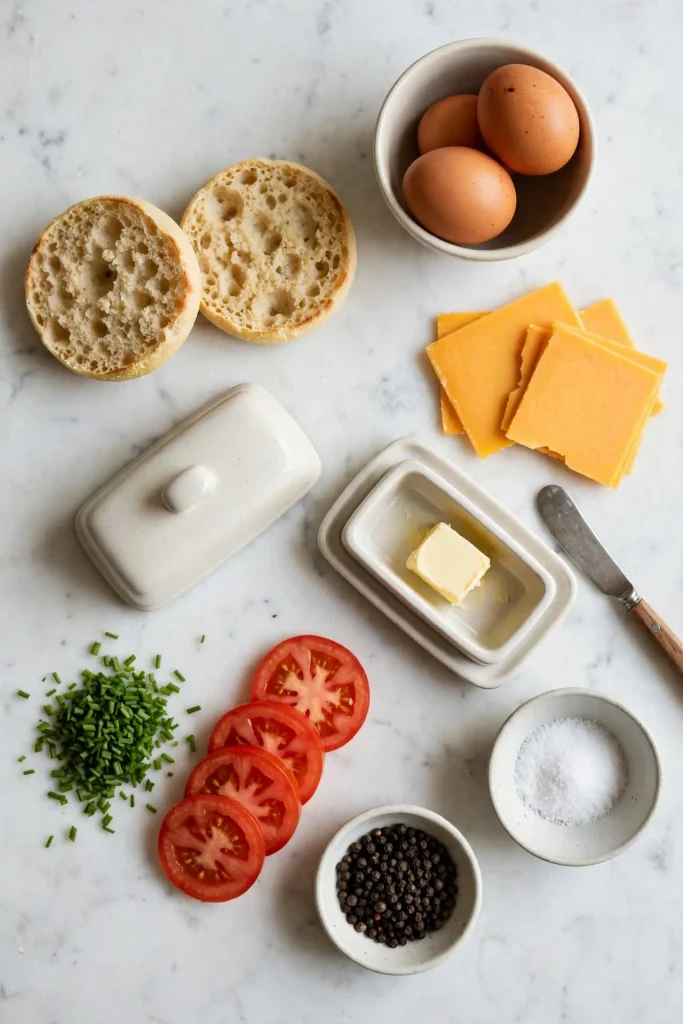
Ingredients You’ll Need
Recipe Timing
| Detail | Info |
|---|---|
| Servings | 4 sandwiches |
| Difficulty | Easy |
| Course | Breakfast |
| Cuisine | American |
| Prep Time | 10 minutes |
| Cook Time | 15 minutes |
| Rest Time | 2 minutes |
| Total Time | 27 minutes |
Selection tips: Choose English muffins that look slightly craggy on the inside, since those nooks hold melted butter. Use large eggs at room temperature so they blend smoothly with the milk. Shred cheddar from a block when you can, because it melts more smoothly than the bagged kind.
- 4 English muffins, split: Their sturdy, open crumb holds up to egg and cheese without getting soggy. Brioche buns or bagels also work.
- 4 large eggs: The center of the sandwich. Eggs set into a tender patty when baked gently.
- 2 tablespoons whole milk: Adds moisture so the egg bakes up soft. Any plant milk can replace it.
- 1/4 teaspoon fine salt and 1/8 teaspoon black pepper: Seasons the egg directly, since plain egg tastes flat between bread.
- 4 slices sharp cheddar (about 3 oz / 85 g): Sharp cheese stands out against mild egg. American, Swiss, or provolone are good swaps.
- 2 tablespoons unsalted butter, softened: Toasts the muffins and adds a rich, nutty flavor.
- 2 slices cooked beef or turkey deli meat per sandwich (optional): Adds savory depth. Skip it for a vegetarian sandwich.
- Cooking spray or oil, for the muffin tin.
- Hot sauce or sliced tomato, for serving (optional).
Read Also: Egg Muffins
Allergen & Dietary Disclosure
This recipe contains eggs, dairy (milk, cheese, butter), and gluten (wheat English muffins).
- Gluten-free: Use gluten-free English muffins or sandwich bread. Toast them a bit longer, since gluten-free bread dries and browns differently.
- Dairy-free: Use plant-based butter, a dairy-free melting cheese, and unsweetened oat milk in the egg.
- Egg-free: Use a seasoned, pan-seared slab of firm tofu in place of the egg patty.
Check labels on bread, deli meat, and plant-based products, since ingredients vary by brand. This recipe is not guaranteed safe for any specific allergy.
Equipment Needed
- 12-cup muffin tin (or 4 wide-mouth jar lids): Gives each egg a round shape that fits the muffin neatly.
- Baking sheet: Holds the muffins and cheese under the broiler and catches any drips.
- Instant-read thermometer: Confirms the eggs reached 160°F (71°C), the safe temperature for egg dishes.
- Parchment paper or foil: Wraps finished sandwiches so they freeze without sticking or drying out.
- Whisk or fork: Blends yolks and whites fully, which prevents streaky patches in the baked egg.
Step-by-Step Directions
Step 1: Heat the Oven and Prep the Tin
Heat the oven to 375°F (190°C) with a rack in the middle. Grease four cups of the muffin tin generously with cooking spray, coating the sides as well as the bottoms.
Step 2: Whisk the Eggs
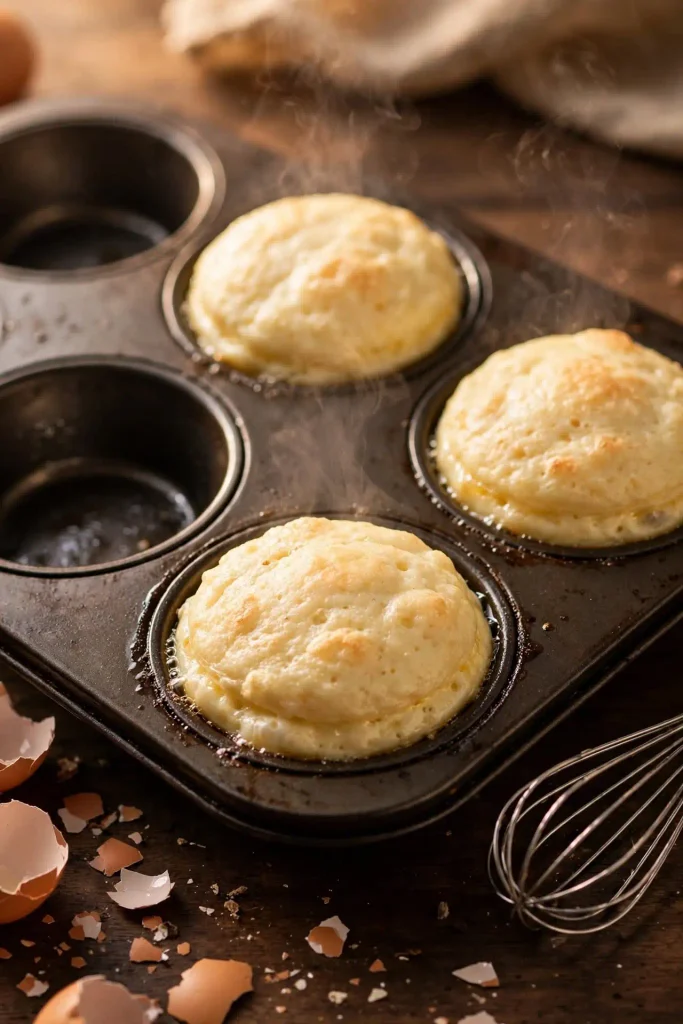
Crack the eggs into a bowl and add the milk, salt, and pepper. Whisk for about 20 seconds, until the mixture is a uniform pale yellow with no streaks of white. Pour it evenly into the four greased cups.
Chef’s Note: Fully blended egg bakes into a smooth, tender patty. Leftover streaks of white turn firm and rubbery.
Step 3: Bake the Egg Patties
Bake for 12 to 15 minutes, until the centers are set, the tops spring back lightly when touched, and a thermometer reads 160°F (71°C). The edges should pull slightly away from the tin.
Chef’s Note: Baking at moderate heat cooks the eggs slowly, which keeps them soft instead of tough. High heat squeezes out moisture and makes them chewy.
Step 4: Toast the English Muffins
While the eggs bake, spread the softened butter over the cut sides of each muffin. Place them butter-side up on a baking sheet and toast under the broiler for 2 to 3 minutes, until the surfaces turn golden brown with a few darker spots. Watch closely, since broilers work fast.
Chef’s Note: Butter creates a thin seal that slows steam from the egg from softening the bread.
Step 5: Melt the Cheese
Lay the egg patties on the bottom halves of the muffins. Top each with a cheese slice and return the baking sheet to the broiler for 30 to 60 seconds, until the cheese turns glossy and begins to droop over the edges.
Step 6: Assemble and Rest
Add the optional deli meat or tomato, then close each sandwich with the top muffin half. Let them sit for 2 minutes so the cheese settles and the layers bind together before you bite in.

Common Mistakes & Troubleshooting
| Problem | Cause | Solution |
|---|---|---|
| Rubbery egg patty | Oven too hot or baked too long | Bake at 375°F (190°C) and pull when the center springs back |
| Soggy bread | Bread not toasted or buttered | Butter the cut sides and broil until golden before assembling |
| Egg sticks to the tin | Not enough grease | Coat each cup fully with cooking spray, including the sides |
| Cheese won’t melt | Cheese sliced too thick or heat too low | Use thin slices and broil for 30 to 60 seconds |
| Sandwich falls apart | Layers are too tall or slippery | Rest 2 minutes after assembling and wrap in parchment |
| Flat, bland flavor | No salt in the egg | Season the eggs before baking, not only the toppings |
Variations & Substitutions
- Spinach and tomato: Fold a handful of chopped fresh spinach into the egg before baking and add a tomato slice at the end.
- Spicy: Stir 1/4 teaspoon chili flakes into the eggs and use pepper jack in place of cheddar.
- Turkey and avocado: Layer sliced turkey and a few slices of avocado after the cheese melts.
- Vegetarian: Skip the deli meat and add roasted bell pepper and a spoonful of pesto.
- Kid-friendly: Use a soft sandwich roll, mild cheese, and cut the finished sandwich into halves.
- Gluten-free or dairy-free: Use the swaps in the allergen section above.
Serving Suggestions
- Fresh fruit: Orange slices, berries, or grapes add sweetness and cool the rich cheese.
- Hot coffee or tea: Both balance the savory egg and buttery bread.
- Roasted potato wedges: A crisp, salty side that makes the plate more filling.
- Hot sauce or chili crisp: A spoonful on the side lets everyone control the heat.
- Fresh orange juice: The acidity cuts through the cheese.
- Yogurt with honey: A cool, tangy side that rounds out the plate.

Tips for the Best Results
- Season the egg itself. Salt in the egg mixture flavors every bite, while salt on top only seasons the surface.
- Use thin cheese slices. Thin slices melt in under a minute, so the egg stays warm and the bread doesn’t over-toast.
- Toast before building. A golden surface keeps the muffin crisp even after sitting for a few minutes.
- Let the sandwich rest. Two minutes lets the cheese set, so the layers hold together when you pick it up.
- Wrap while warm for freezing. Warm sandwiches trap steam and turn soggy, so cool them completely first.
Storage Tips
Refrigerator
Cool the assembled sandwiches completely, wrap each in parchment, and store them in an airtight container for up to 4 days. Keep tomato and fresh toppings separate until serving.
Freezer
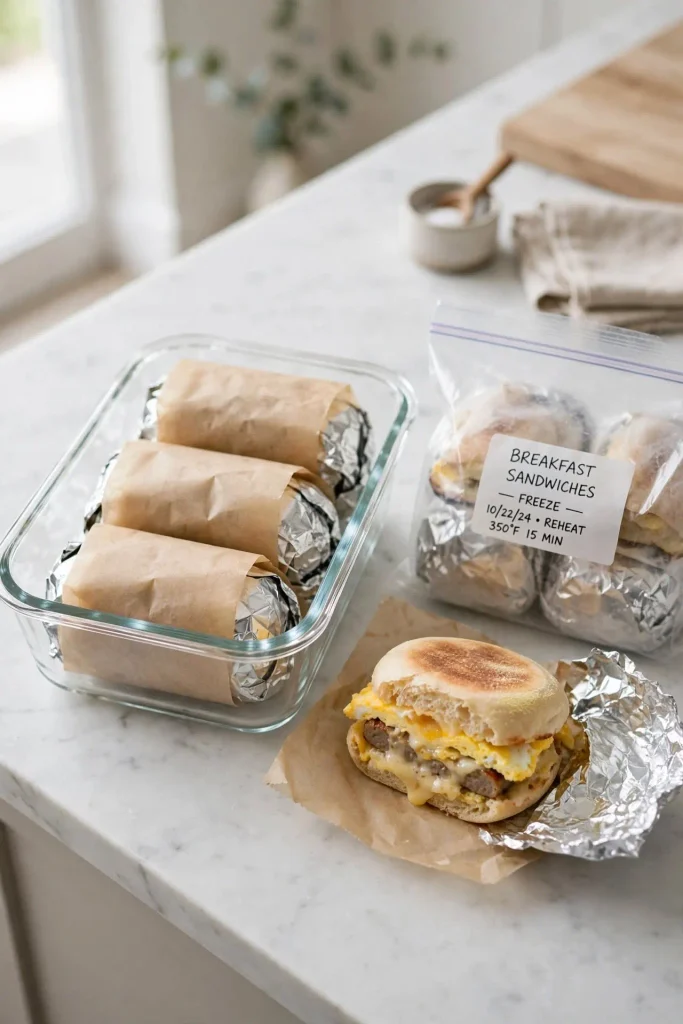
Wrap each cooled sandwich in parchment, then in foil, and freeze for up to 2 months. Freezing the components separately works too: egg patties and toasted muffins keep their texture best that way.
Reheating
Unwrap a refrigerated sandwich, wrap it in a damp paper towel, and microwave for 45 to 60 seconds. For a frozen sandwich, microwave for 90 seconds, flipping halfway. For crisp bread, finish in a 350°F (175°C) oven for 5 minutes.
Nutrition Information
Per serving (1 sandwich, without optional deli meat):
- Calories: 340
- Protein: 17 g
- Carbohydrates: 28 g
- Fiber: 2 g
- Sugar: 4 g
- Fat: 18 g
- Saturated Fat: 9 g
- Cholesterol: 215 mg
- Sodium: 620 mg
- Vitamin C: 0 mg
- Calcium: 260 mg
- Iron: 2.3 mg
- Potassium: 190 mg
Nutrition values are approximate and may vary based on brands and portion sizes.
Why This Recipe Works
Experience: [Add your own testing notes here, such as how many batches you made and which English muffin brands you tried.]
Expertise: Baking the eggs in a muffin tin gives an even, round patty that fits the bread, with no flipping or frying. Buttering and toasting the muffin before assembly slows moisture from reaching the crumb.
Authoritativeness: The numbers are specific on purpose: a 375°F (190°C) oven, 12 to 15 minutes of egg baking, a 160°F (71°C) center, and a 2-minute rest. Those are the points where most breakfast sandwiches turn rubbery or soggy.
Trustworthiness: [Add a genuine reader comment or your own family’s reaction here, only if you have one.]
Read Also: Breakfast Casserole
Frequently Asked Questions
Can I make breakfast sandwiches ahead of time?
Yes, they are one of the best make-ahead breakfasts. Cool the assembled sandwiches fully, wrap each in parchment, and refrigerate for up to 4 days or freeze for up to 2 months. For the best texture, store the egg patties and toasted muffins separately and assemble them when you reheat. This keeps the bread from absorbing moisture from the egg while it sits.
Why is my breakfast sandwich soggy?
Soggy bread usually comes from steam trapped between warm layers. Toast the muffin until golden, butter the cut sides to form a barrier, and cool the sandwiches completely before wrapping for storage. If you add tomato, keep it on the side until serving, since its juice soaks into the crumb quickly. Reheating in a hot oven for the last few minutes also helps the bread crisp.
What can I use instead of an English muffin?
Several breads work well. Brioche buns give a soft, slightly sweet base, while bagels add chew and hold up to heavy fillings. Croissants make a buttery, flaky sandwich but are fragile, so toast them lightly. Biscuits, sourdough slices, and gluten-free rolls also work. Choose bread that is sturdy enough to hold egg and cheese without collapsing, and toast it before assembling.
How do I know when the baked egg is done?
The egg is done when the center springs back lightly under a finger, the edges pull away from the tin, and a thermometer reads 160°F (71°C). The top should look matte and set, not shiny or wet. Overbaked eggs turn dry and rubbery, so check at 12 minutes and pull them as soon as they firm up. They keep cooking slightly in the hot tin.
Can I make breakfast sandwiches without eggs?
Yes, with a few tweaks. Use a slab of firm tofu, pressed dry and seasoned with salt, pepper, and a pinch of turmeric, then pan-sear it until golden on both sides. Cheese, tomato, and avocado round out the flavor. Check labels on the bread and cheese if anyone at the table has other allergies, and remember the recipe is not guaranteed safe for any specific allergy.
How do I reheat a frozen breakfast sandwich?
Unwrap it and wrap it in a damp paper towel, then microwave for about 90 seconds, flipping halfway, until the center is hot. For crisper bread, thaw it in the fridge overnight and warm it in a 350°F (175°C) oven for 5 to 8 minutes. The center should reach 165°F (74°C) when reheated. Skip the foil in the microwave and remove it before heating.

Conclusion
A good breakfast sandwich comes down to three habits: gentle heat for the egg, a buttered and toasted muffin, and a short rest before you eat. Get those right and you skip the rubbery egg and soggy bread that make most versions disappointing.
After a few rounds, you’ll know the look of a ready egg and a perfectly melted slice of cheese without checking the clock. Try the spinach or spicy variation next, and keep a few wrapped sandwiches in the freezer so a hot breakfast is always within reach.
If you loved this recipe, save it to your breakfast Pinterest board so you can find it easily later!
Easy Breakfast Sandwich
Ingredients
Method
- Preheat the oven to 375°F (190°C) and coat four muffin cups well with cooking spray.
- Beat the eggs with the milk, salt, and pepper until smooth and evenly pale, then divide among the four cups.
- Bake 12 to 15 minutes, until the centers feel springy and the eggs reach 160°F (71°C).
- Spread butter over the cut sides of the muffins and broil them butter-side up for 2 to 3 minutes, until golden.
- Set an egg patty on each bottom half, add a cheese slice, and broil another 30 to 60 seconds until the cheese turns glossy and soft.
- Add any extras, top with the muffin lids, and let the sandwiches sit for 2 minutes before serving.
Notes
- Cool completely before wrapping if freezing, to prevent soggy bread.
- Store egg patties and toasted muffins separately for the best texture after reheating.
- Leftovers keep 4 days in the fridge or 2 months in the freezer.
- Use gluten-free muffins and dairy-free cheese and butter for allergy-friendly swaps.



2 Comments
Comments are closed.