Lemon Chicken Recipe: Best 35-Minute Bright Skillet Dinner
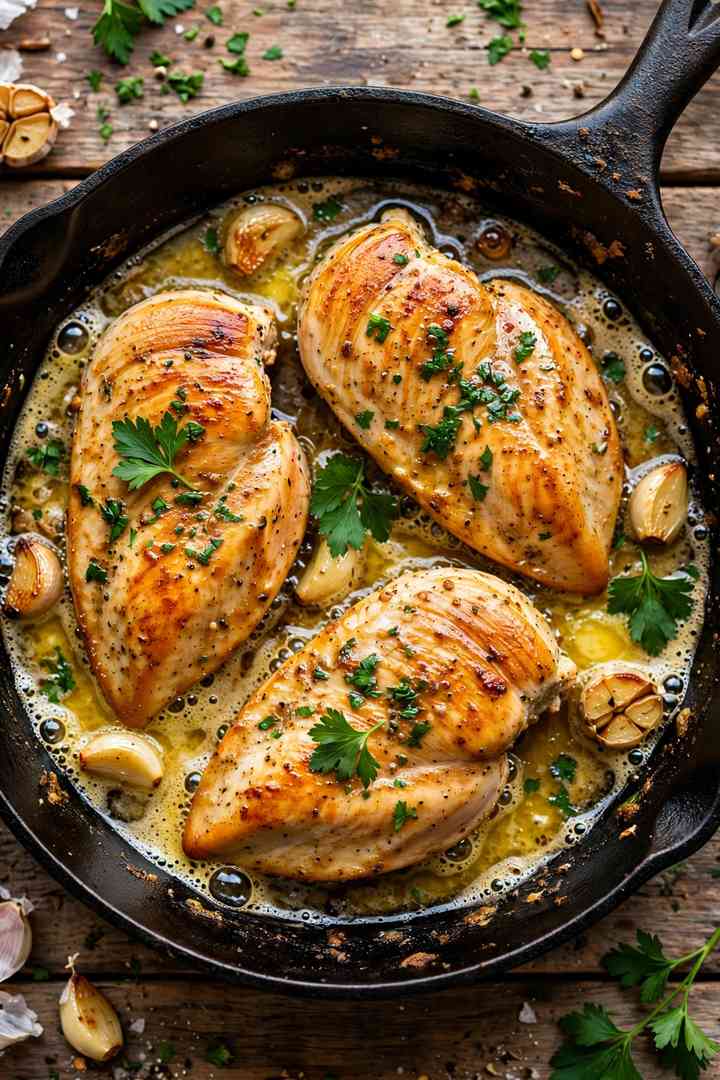
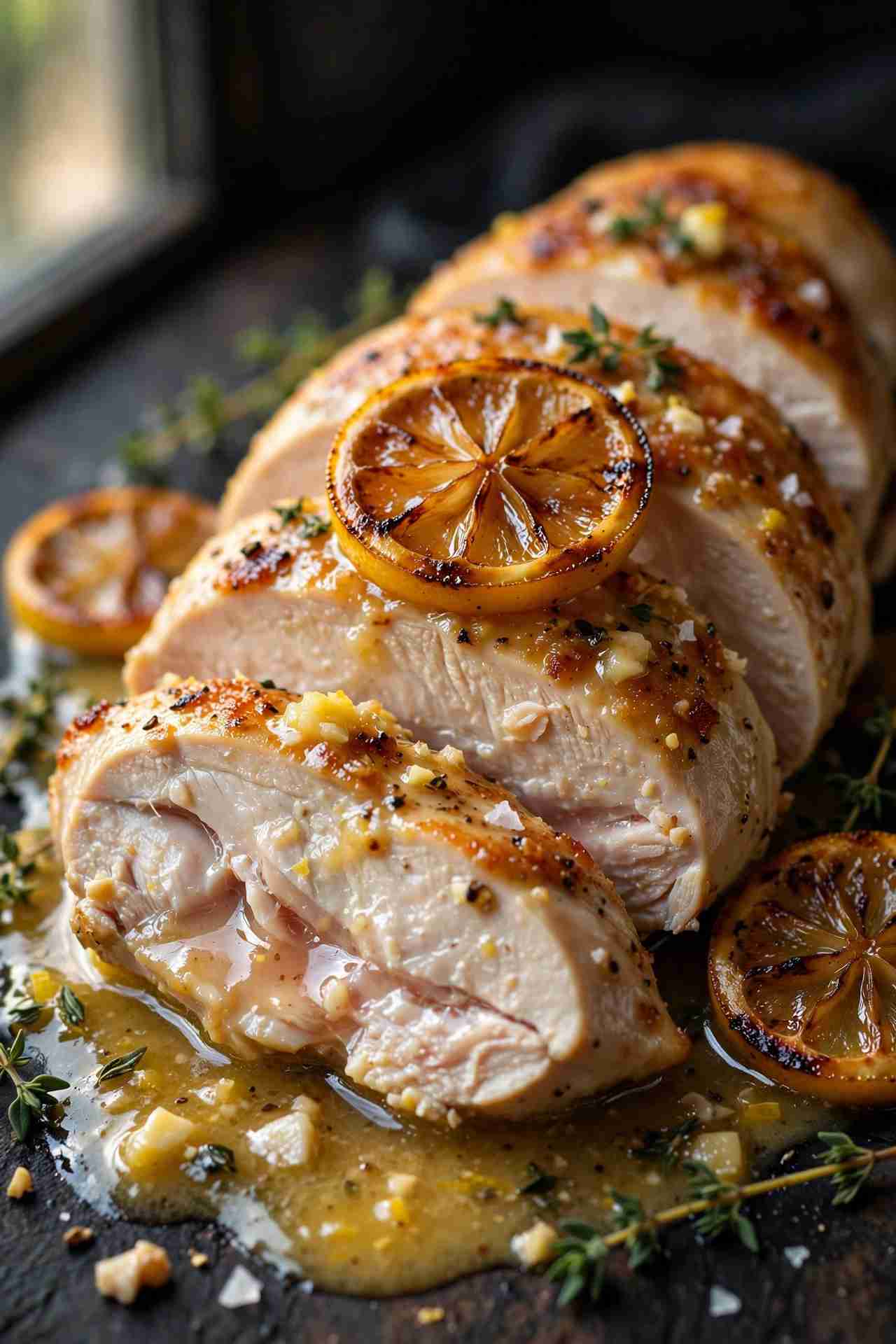
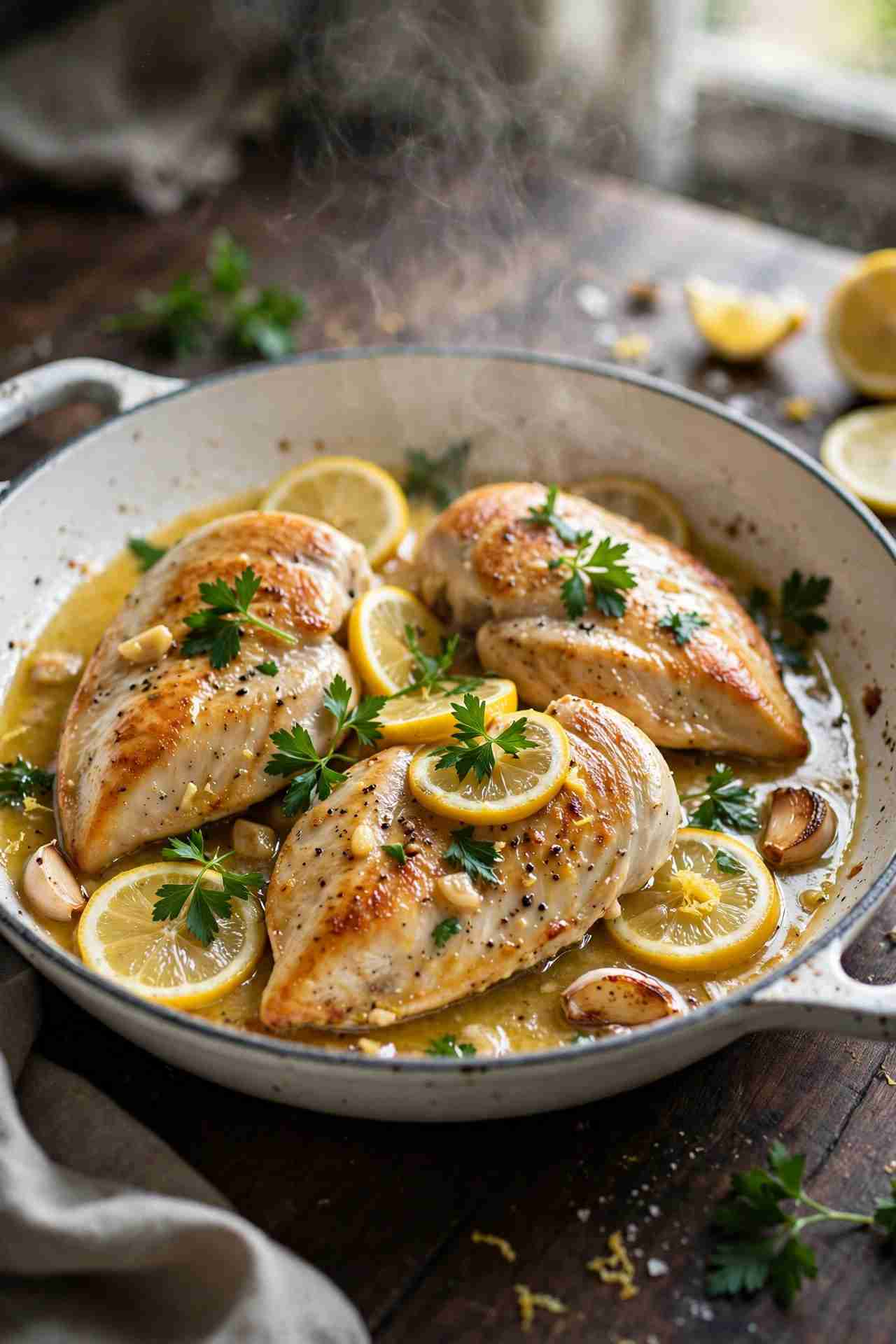
Some chicken dinners are fine. This one makes people ask for the recipe. This lemon chicken recipe gives you golden pan-seared chicken breasts nestled in a bright, buttery lemon garlic sauce that tastes like it took all afternoon. It took 35 minutes, and most of that was the chicken doing its thing in the skillet.
The secret is building the sauce in the same pan where the chicken seared, so every browned bit melts into the lemon butter. Fresh lemon juice keeps it lively, never sour, and a handful of parsley at the end makes the whole skillet look like a restaurant dish. If your weeknight rotation needs a hero, this lemon chicken recipe is ready for the job.
Why You’ll Love This Lemon Chicken Recipe
- Restaurant flavor, weeknight effort. One skillet and 35 minutes gets you a dish that tastes far fancier than it is.
- Bright, not sour. Fresh lemon juice plus butter gives zing without puckering, balanced by savory pan drippings.
- Juicy every time. Pounding the chicken even and searing hot means no dry edges, just tender meat throughout.
- Pan sauce magic. The sauce builds itself from the browned bits, so nothing goes to waste and everything tastes deeper.
- Endlessly pairable. Mashed potatoes, pasta, rice, or a simple salad, this chicken goes with all of it.
Read Also: Chicken Piccata Recipe
Ingredients You’ll Need
Recipe Timing
| Detail | Value |
|---|---|
| Prep Time | 10 minutes |
| Cook Time | 20 minutes |
| Rest Time | 5 minutes |
| Total Time | 35 minutes |
| Servings | 4 |
| Difficulty | Easy |
| Course | Dinner |
| Cuisine | American |
Selection tips: Buy lemons that feel heavy for their size, they hold the most juice. For chicken, look for breasts of similar size so they cook evenly, or plan to pound them. Real butter, not margarine, makes the sauce silky instead of greasy.
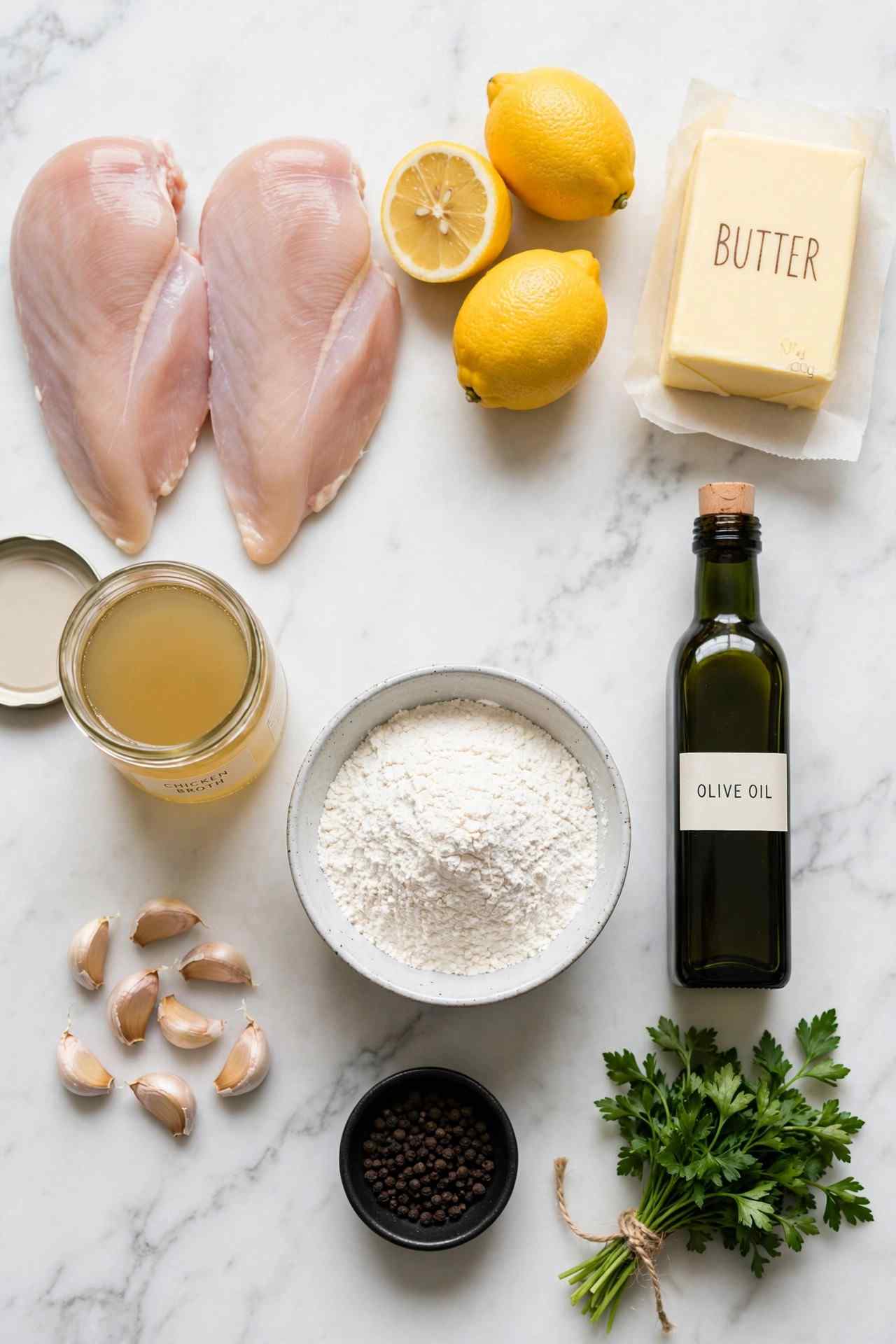
- 4 boneless skinless chicken breasts: about 1 1/2 lbs total. Pounded to an even 3/4-inch thickness.
- 1/2 cup all-purpose flour: the light dredge that gives a golden crust and later thickens the sauce.
- 1 teaspoon salt, 1/2 teaspoon black pepper, 1 teaspoon garlic powder: seasons the flour so the crust is flavorful, not bland.
- 3 tablespoons olive oil: for searing. It handles the heat better than butter alone.
- 4 tablespoons butter: divided. Half for the sauce base, half swirled in at the end for gloss.
- 4 cloves garlic, minced: added after searing so it perfumes the sauce without burning.
- 3/4 cup chicken broth: low sodium lets you control the salt. It deglazes the pan beautifully.
- 1/3 cup fresh lemon juice: about 2 lemons. Bottled juice tastes flat here, fresh is worth it.
- 1 lemon, thinly sliced: simmered in the sauce, the slices turn sweet and gorgeous.
- 2 tablespoons capers: optional but classic. Their briny pop is perfect against the lemon.
- 1/4 cup fresh parsley, chopped: the fresh finish that lifts the whole dish.
Read Also: Garlic Butter Chicken
Allergen & Dietary Disclosure
This recipe contains gluten (flour dredge) and dairy (butter). For a gluten free version, dredge in a gluten free flour blend or plain cornstarch. For dairy free, sear in olive oil only and finish the sauce with a dairy free butter alternative. This is a home kitchen recipe and is not guaranteed safe for any specific allergy.
Equipment Needed
- Large skillet: stainless or cast iron gives the best fond for the pan sauce. Nonstick works but browns less.
- Meat mallet or rolling pin: even thickness is the difference between juicy and dry chicken.
- Instant read thermometer: the only reliable way to hit 165°F without guessing.
- Tongs: for flipping without piercing the meat and losing juices.
Step-by-Step Directions
Step 1: Pound and Season
Place the chicken breasts between plastic wrap and pound to an even 3/4-inch thickness. Pat dry and season both sides with half the salt and pepper.
Chef’s Note: Even thickness is everything. A thick end and thin end means one part dries out while the other finishes, so take the minute to pound.
Step 2: Dredge in Flour
Stir the flour with the remaining salt, pepper, and garlic powder in a shallow dish. Press each breast into the mixture, coating both sides, and shake off the excess.
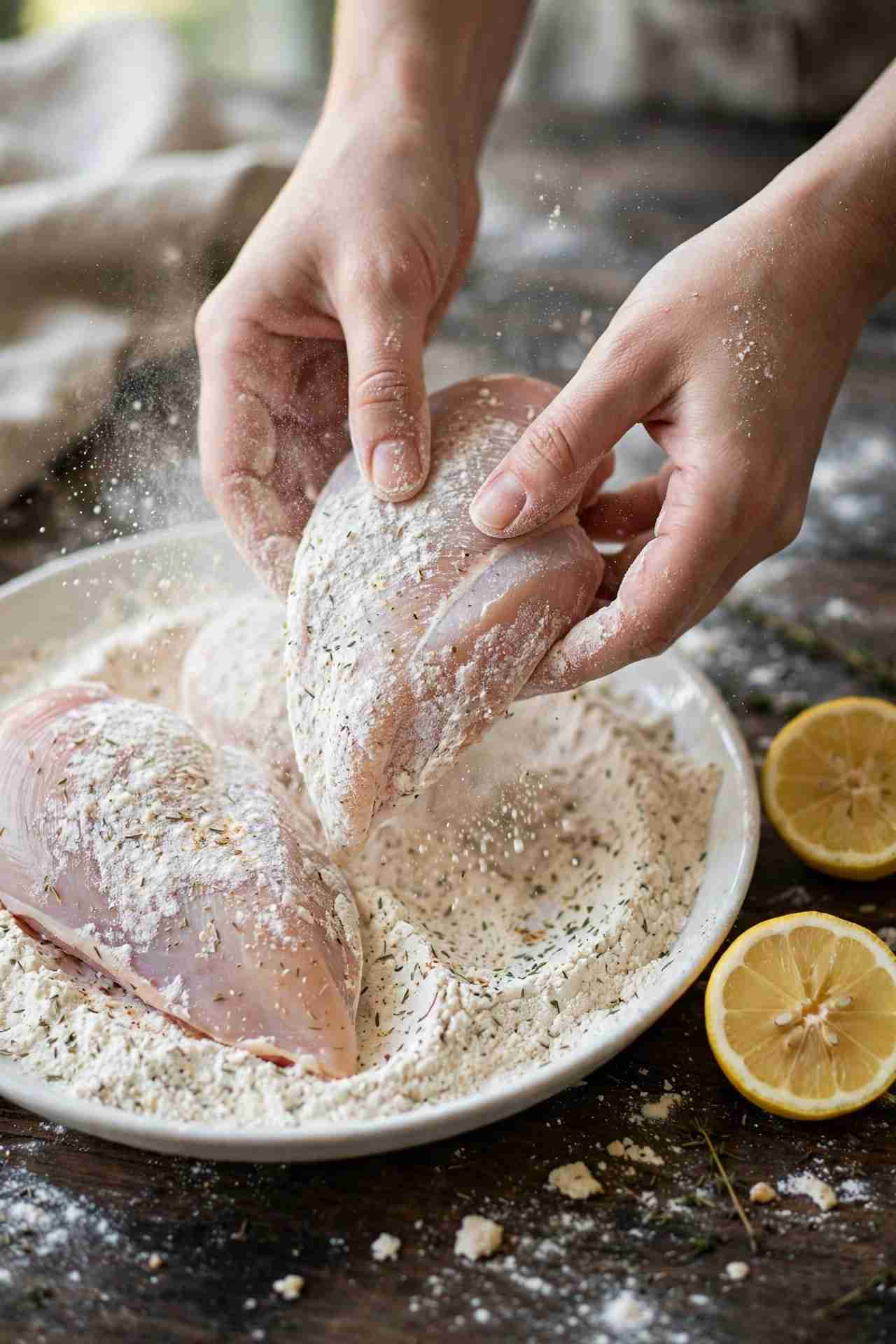
Step 3: Sear Until Golden
Heat the olive oil in a large skillet over medium high heat until shimmering. Sear the chicken 4 to 5 minutes per side until deep golden and cooked to 165°F inside. Transfer to a plate and tent with foil.
Chef’s Note: Do not move the chicken for the first 3 minutes. Leaving it alone lets the crust form and release naturally instead of sticking.
Step 4: Build the Lemon Sauce
Reduce the heat to medium. Add 2 tablespoons of butter to the skillet and let it melt, scraping up the browned bits. Add the garlic and cook 30 seconds. Pour in the broth and lemon juice, add the lemon slices and capers, and simmer 4 to 5 minutes until slightly reduced.
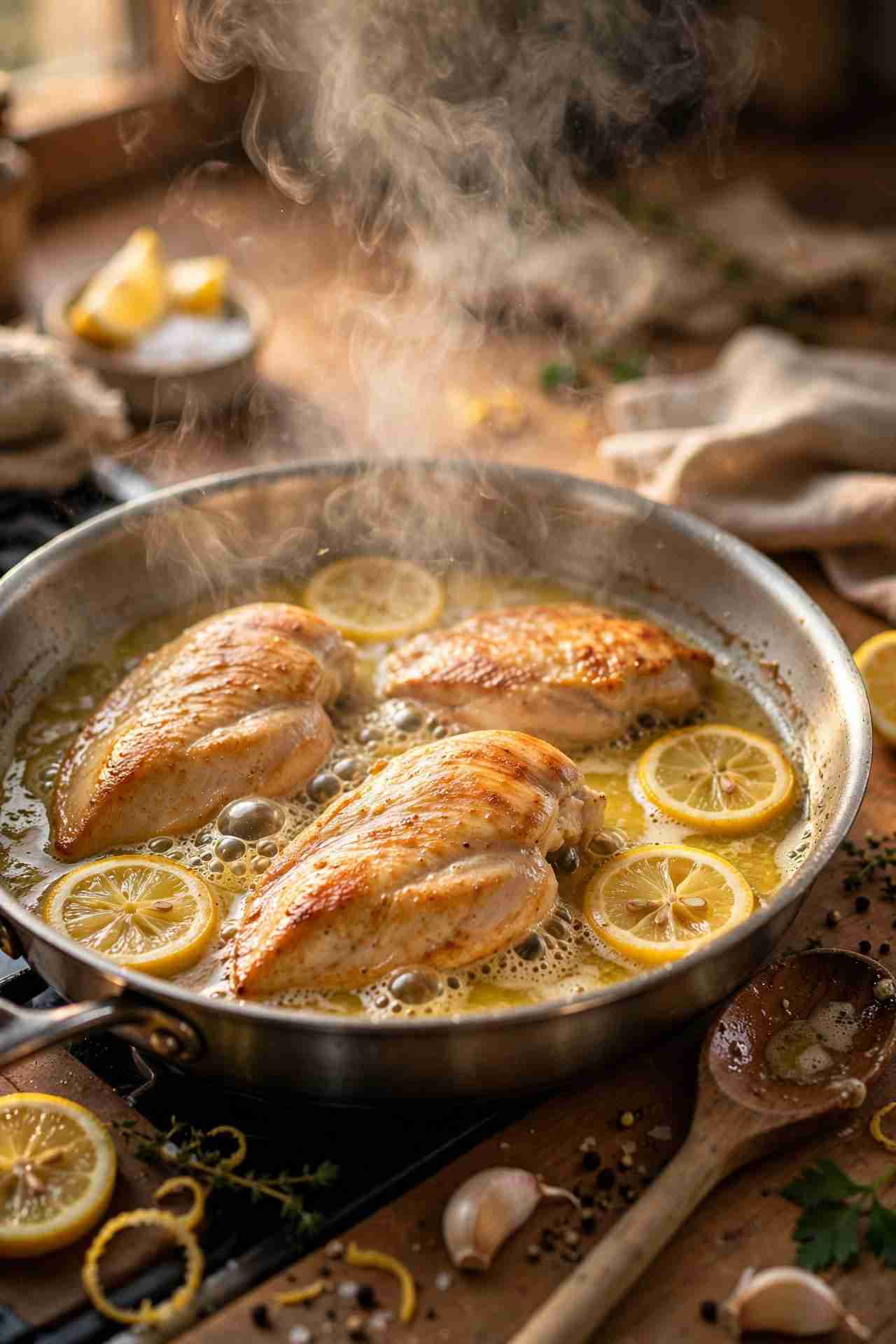
Step 5: Finish and Glaze
Swirl in the remaining 2 tablespoons of butter until the sauce turns silky and glossy. Return the chicken to the skillet, spoon sauce over each piece, and simmer 2 minutes so the flavors marry.
Chef’s Note: Take the pan off the heat before adding the final butter. Too much heat breaks the sauce instead of making it glossy.
Step 6: Rest and Serve
Rest the chicken in the sauce for 5 minutes. Shower with parsley and serve with plenty of sauce spooned over the top.
Common Mistakes & Troubleshooting
| Problem | Cause | Solution |
|---|---|---|
| Chicken is dry | Uneven thickness or overcooked | Pound to 3/4 inch even and pull at exactly 165°F |
| Sauce tastes too sour | Too much lemon or no balance | Add another tablespoon of butter and a pinch of sugar to round it out |
| Sauce is thin | Not reduced enough | Simmer 2 more minutes; the flour from the dredge helps it thicken |
| Flour coating fell off | Chicken was wet or crowded | Pat dry before dredging and shake off excess flour |
| Garlic burned | Added to screaming hot pan | Reduce heat before adding garlic and stir constantly for 30 seconds |
Variations & Substitutions
- Creamy version. Stir in 1/4 cup of heavy cream with the final butter for a richer sauce.
- Chicken thighs. Boneless thighs stay extra juicy. Sear 5 to 6 minutes per side.
- Herb twist. Add a teaspoon of fresh thyme or oregano with the garlic.
- Gluten free. Dredge in cornstarch or a gluten free flour blend. The sauce thickens the same.
- Extra lemon. Add a teaspoon of lemon zest to the flour for double citrus punch.
- Lemon-butter touch. Add an extra squeeze of lemon and a knob of butter off the heat for a richer piccata-style sauce.
Serving Suggestions
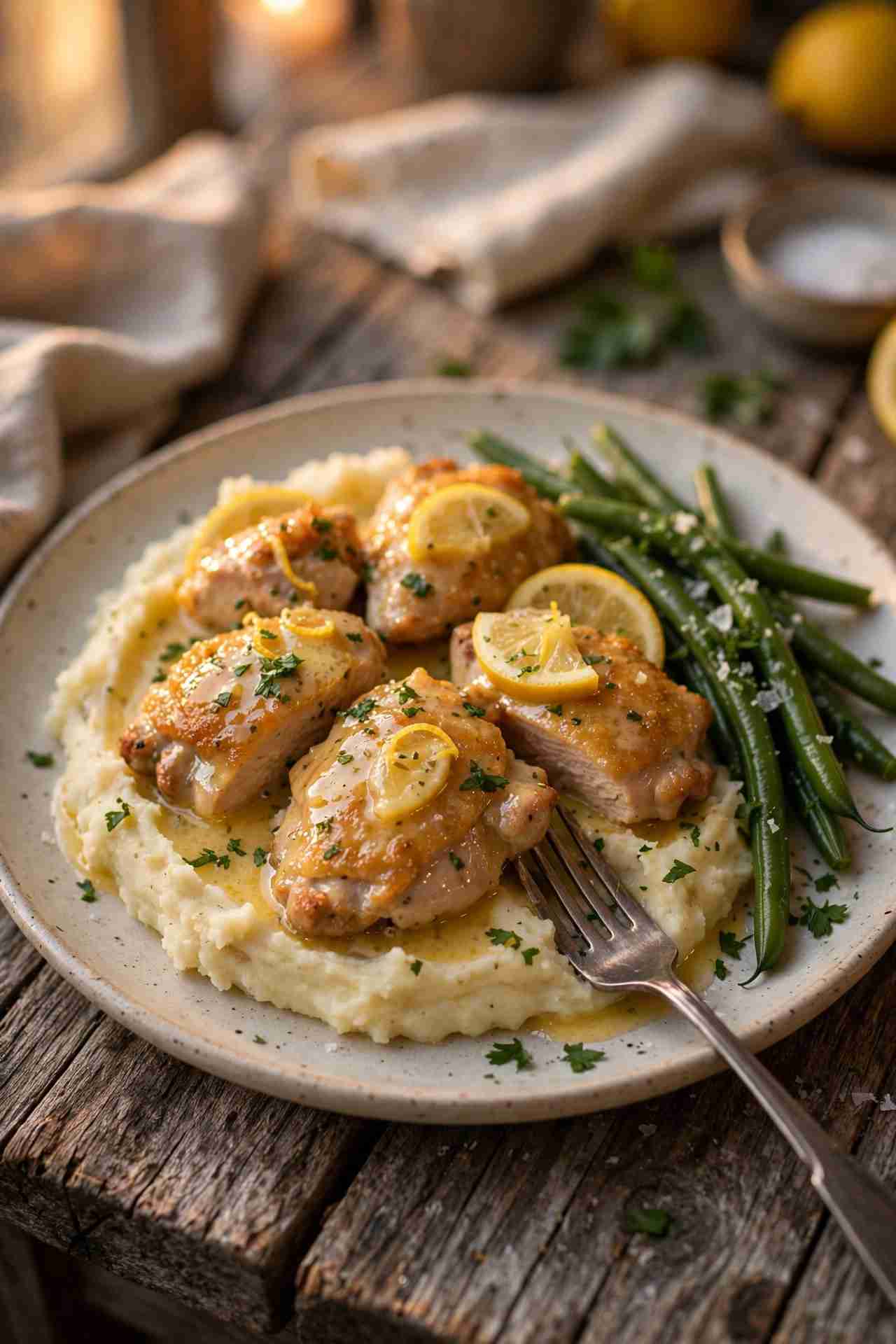
- Over creamy mashed potatoes that soak up the lemon butter sauce.
- With angel hair pasta tossed in the extra sauce.
- Alongside roasted asparagus or green beans.
- Over fluffy rice with a simple side salad.
- With crusty bread for mopping up every drop.
- Next to a bright arugula salad with shaved parmesan.
Tips for the Best Results
- Fresh lemons only. Bottled juice gives a flat, harsh sourness. Two fresh lemons make the dish.
- Hot pan, then chicken. The oil should shimmer before the chicken goes in for a proper sear.
- Scrape the fond. Those browned bits are the foundation of the sauce. Do not leave them behind.
- Butter off heat. The final swirl of butter goes in off the heat for a glossy, unbroken sauce.
- Rest in the sauce. Five minutes lets the chicken relax and drink up flavor.
Storage Tips
Refrigerator
Cool completely and store chicken and sauce together in an airtight container for up to 4 days.
Freezer
Freeze for up to 3 months in portion containers. The sauce may separate slightly; it comes back with gentle reheating.
Reheating
Warm gently in a covered skillet over medium low heat with a splash of broth. Avoid the microwave, which toughens the chicken.
Nutrition Information
Per serving (approximate): Calories 420, Protein 38g, Carbohydrates 14g, Fiber 1g, Sugar 2g, Fat 22g, Saturated Fat 8g, Cholesterol 140mg, Sodium 680mg. Nutrition values are approximate and may vary based on brands and portion sizes.
Why This Recipe Works
The flour dredge is doing quiet double duty. It creates the golden crust you see, and the starch that stays on the chicken dissolves into the pan sauce later, giving it body without any extra thickener. That is why the sauce turns silky instead of watery.
Deglazing with broth and lemon juice captures the fond, the caramelized proteins stuck to the pan from searing. That fond holds more savory depth than any stock cube, and dissolving it into the sauce is what makes homemade taste better than jarred every time.
In my experience, the butter temperature trick is the one that separates good from great. Butter swirled in off the heat emulsifies into the sauce for that restaurant gloss. Butter boiled in breaks and turns greasy. Pull the pan, then swirl, and the sauce shines.
Read Also: Chicken Breast Recipe
Frequently Asked Questions
Can I use chicken thighs instead of breasts?
Yes, and they are very forgiving. Use boneless skinless thighs and sear 5 to 6 minutes per side until they reach 165°F. Thighs stay juicier if you overshoot the timing a little, which makes them great for beginners.
Why does my lemon sauce taste too sour?
It usually means the lemon to butter ratio tipped too far. Add another tablespoon of cold butter off the heat and a small pinch of sugar. Both round out sharp edges without dulling the fresh lemon flavor that makes the dish.
Can I make lemon chicken ahead of time?
Yes, it keeps 4 days refrigerated in its sauce. Reheat gently in a covered skillet with a splash of broth to loosen the sauce. The chicken stays tender because it rests in the sauce, which protects it from drying out.
How do I know when the chicken is done?
Use an instant read thermometer and look for 165°F at the thickest part. Visually, the juices should run clear and the meat should be opaque throughout with no pink. The 2-minute simmer in the sauce at the end finishes any piece that was close.
Is this recipe gluten free?
Not as written, because of the flour dredge. Swap the all-purpose flour for a gluten free blend or plain cornstarch and the rest of the recipe is naturally gluten free. The sauce thickens just as well.
What is the difference between lemon chicken and chicken piccata?
They are close cousins. Piccata traditionally uses thin cutlets, white wine, and always includes capers. This lemon chicken uses thicker breasts, chicken broth instead of wine, and keeps capers optional, which makes it a simpler weeknight version of the same idea.
Conclusion
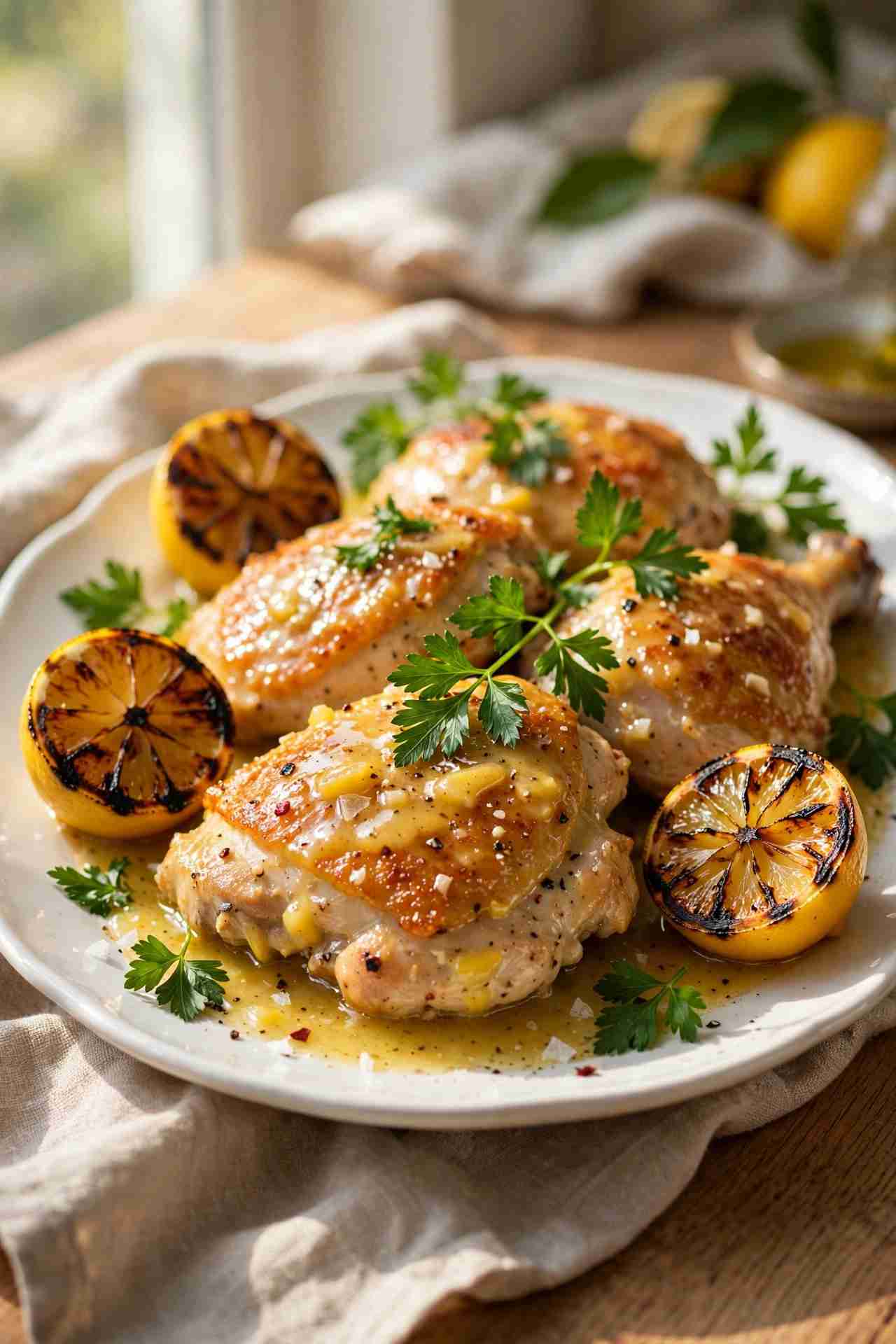
This lemon chicken recipe is proof that a few fresh ingredients and one hot skillet can beat takeout any night of the week. Bright, buttery, and on the table in 35 minutes, it is the kind of dinner that quietly becomes a family favorite. Give it a try this week.
If you loved this recipe, save it to your dinner Pinterest board so you can find it easily later!
Lemon Chicken Recipe
Ingredients
Method
- Pound chicken to an even 3/4-inch thickness, pat dry, and season with half the salt and pepper.
- Mix flour with remaining salt, pepper, and garlic powder. Coat each breast on both sides and shake off excess.
- Heat olive oil in a large skillet over medium-high heat. Sear chicken 4 to 5 minutes per side until deep golden and 165°F inside. Tent with foil.
- Lower heat to medium. Melt 2 tbsp butter, scraping up browned bits. Add garlic for 30 seconds. Pour in broth and lemon juice, add lemon slices and capers, and simmer 4 to 5 minutes.
- Off the heat, swirl in remaining butter until glossy. Return chicken, spoon sauce over, and simmer 2 minutes.
- Rest 5 minutes in the sauce. Garnish with parsley and serve with extra sauce.
Notes
- Pound to even thickness so nothing dries out.
- Use fresh lemons, bottled juice tastes flat here.
- Swirl the final butter in off the heat for a glossy sauce.
- Do not move the chicken for the first 3 minutes of searing.