Creamy Tomato Soup Recipe: Fresh, Easy and So Delicious
Introduction
There is a quiet kind of comfort in a bowl of tomato soup made from real tomatoes. The smell of onion and garlic in warm oil, the sweet smell of ripe tomatoes as they soften, and the soft swirl of cream at the end make a simple lunch feel like care in a bowl. This tomato soup recipe keeps that feeling close, with plain ingredients and a clear path from pot to table.
This tomato soup recipe serves 4, so it fits a family lunch, a light dinner, or a pot you can share with a friend who drops by. It works well on a cool day, with grilled cheese or crusty bread, and it tastes just as good the next day, when the flavors have had a chance to settle together.
Why You’ll Love This Tomato Soup Recipe
- Fresh tomato flavor: Ripe tomatoes give the soup a bright, natural sweetness that canned soup rarely matches.
- Smooth and creamy: Blending the soup and adding cream gives it a soft, silky texture in every spoonful.
- Simple ingredients: You need only a short list of pantry staples, plus fresh tomatoes and basil.
- Easy to adjust: You can make it thicker, thinner, spicier, or milder to suit the people at your table.
- Great with bread: It pairs well with grilled cheese, crusty bread, or a plain roll for dipping.
Read Also: Chicken Noodle Soup
Ingredients You’ll Need
Gather everything before you start, so the cooking moves in a calm, steady order. Pick tomatoes that feel heavy for their size and smell sweet at the stem end.
Recipe Timing
| Detail | Value |
|---|---|
| Servings | 4 |
| Difficulty | Easy |
| Course | Soup |
| Cuisine | American |
| Prep Time | 15 minutes |
| Cook Time | 35 minutes |
| Rest Time | 5 minutes |
| Total Time | 55 minutes |
- 2 tablespoons olive oil: warms the base and helps the onion and garlic soften without sticking
- 1 medium yellow onion, chopped: adds a mild sweetness that balances the tomatoes
- 3 cloves garlic, minced: gives the soup a warm, savory depth
- 2 pounds ripe tomatoes, chopped: the heart of the soup, so choose the ripest ones you can find
- 2 tablespoons tomato paste: adds rich color and a deeper tomato flavor
- 3 cups vegetable stock: thins the soup to a pourable texture and adds savory flavor
- 1 teaspoon sugar: softens the sharp edge of the tomatoes without making the soup sweet
- 1 teaspoon salt, plus more to taste: brings out the flavor of the tomatoes and the stock
- 1/2 teaspoon black pepper: adds a gentle warmth at the finish
- 1/2 cup heavy cream: makes the soup smooth and soft, and calms the acidity
- 1/4 cup fresh basil leaves, torn: adds a fresh, green note at the end
- 1 tablespoon butter: adds a soft richness and a smooth finish
Read Also: French Onion Soup

Allergen & Dietary Disclosure
This tomato soup recipe contains milk, in the cream and butter, and it is made with vegetable stock, so check your stock label if you need it gluten free. For a dairy free bowl, use a plain plant cream and a dairy free butter, and taste again before you serve it, since the balance of salt and sweetness can shift a little. This recipe is not guaranteed safe for any specific allergy, so read every label and use the brands you trust.
Equipment Needed
- Large pot: gives the tomatoes room to cook down without splashing over the sides.
- Wooden spoon: lets you stir the base and scrape up the soft bits from the bottom of the pot.
- Blender or immersion blender: turns the cooked tomatoes into a smooth soup.
- Ladle: helps you serve neat bowls without spills.
- Cutting board and sharp knife: make the chopping quick and safe.
Step-by-Step Directions
Step 1: Soften the Onion and Garlic
Warm the olive oil in a large pot over medium heat, then add the chopped onion and cook it until it turns soft and clear at the edges. Add the minced garlic and stir it through the onion until it smells warm and sweet, taking care not to let it brown.
Step 2: Add the Tomato Paste
Stir in the tomato paste and cook it with the onion and garlic until it turns a deeper red and smells rich. This short step builds a strong tomato base, so keep stirring and keep the paste moving across the bottom of the pot.
Step 3: Add the Tomatoes and Stock
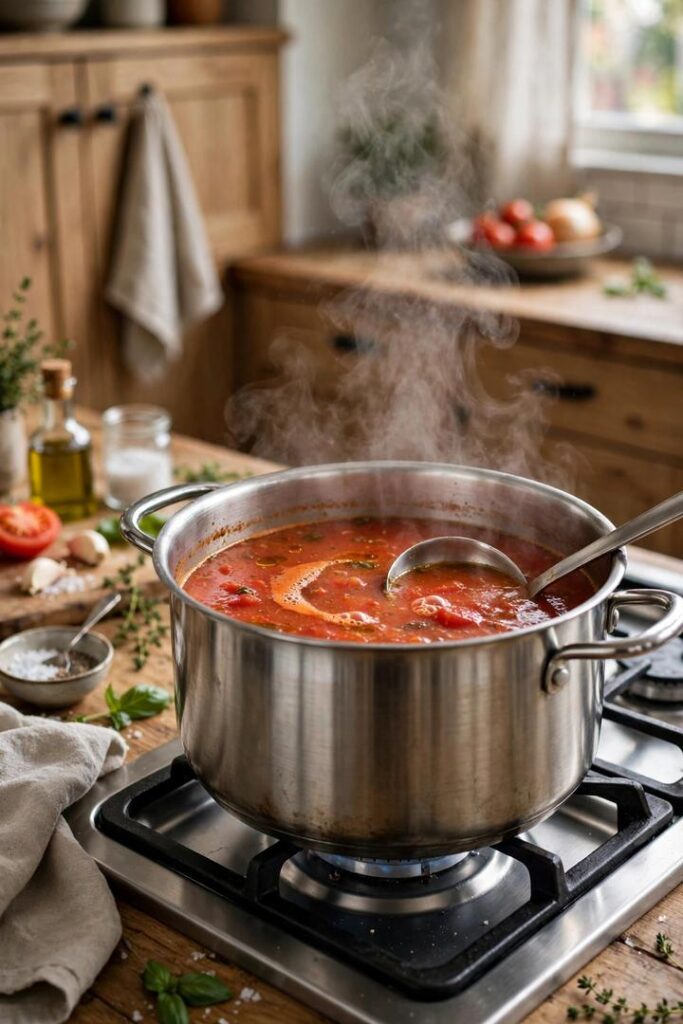
Add the chopped tomatoes, vegetable stock, sugar, salt, and black pepper to the pot, and stir everything together. Bring the pot to a gentle simmer, with small bubbles breaking at the surface, then lower the heat so the soup cooks in a calm, steady way.
Step 4: Simmer Until Soft
Let the soup cook until the tomatoes have broken down and turned soft, and the flavors have come together into one smooth, savory pot. Stir now and then, and press any large pieces of tomato against the side of the pot to help them break apart.

Step 5: Blend Until Smooth
Take the pot off the heat and let the soup cool a little, then blend it in batches in a blender, or use an immersion blender right in the pot, until it looks smooth and even. Hold the blender lid down with a folded towel if you blend it while it is still warm, and work in small batches so it stays safe.
Step 6: Stir in the Cream and Butter
Return the blended soup to the pot and stir in the heavy cream and butter until the butter has melted and the soup looks pale, smooth, and creamy. Taste the soup now and add more salt or a pinch of sugar if it needs it, since this tomato soup recipe should taste bright and balanced, not sharp.
Step 7: Add Basil and Serve
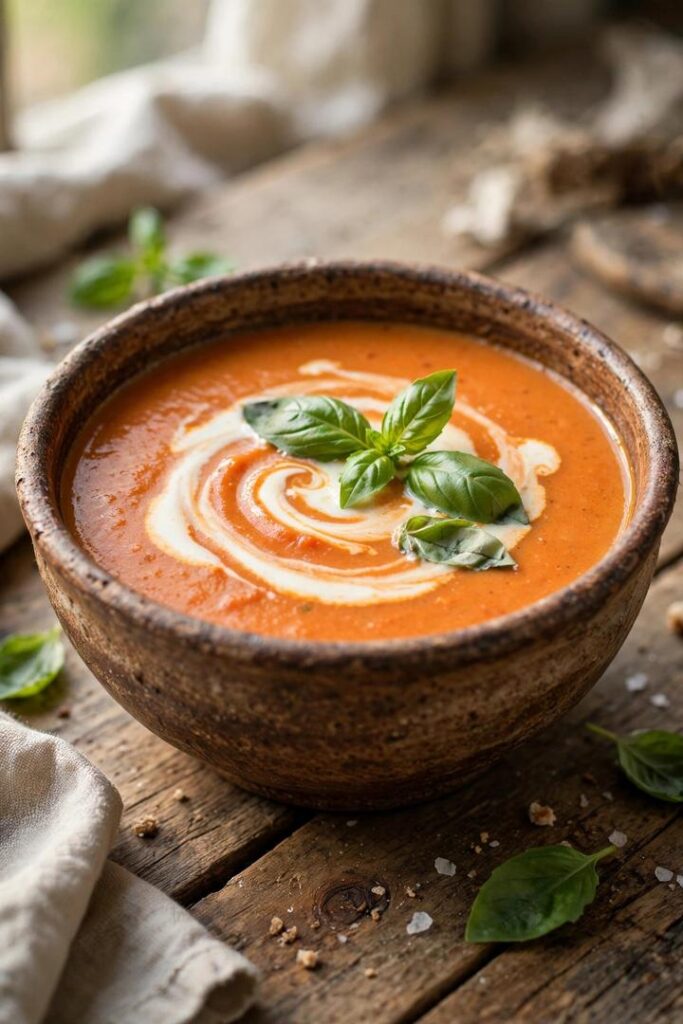
Stir in the torn basil leaves and ladle the soup into warm bowls. Top each bowl with a little extra cream or a few small basil leaves, and serve it right away with your favorite bread for dipping.
Common Mistakes & Troubleshooting
A few small slips can dull the flavor or spoil the texture, but each one is easy to fix once you know what to look for. Use the table below to spot the cause and put it right.
| Problem | Cause | Solution |
|---|---|---|
| Soup tastes too sharp | Tomatoes were underripe or too much acid stayed in the pot | Stir in a pinch of sugar and a little more cream, then taste again |
| Soup is too thin | Too much stock was added for the amount of tomato | Simmer the soup with the lid off until it thickens to the texture you like |
| Soup is too thick | Tomatoes cooked down a lot or too little stock was used | Stir in vegetable stock a little at a time until it pours easily |
| Soup has a grainy texture | Tomatoes were not blended long enough | Blend the soup again until it looks smooth, then pass it through a sieve if you want it extra silky |
| Garlic tastes bitter | Garlic cooked too long or browned in the pot | Start the base again with fresh garlic, and add it only after the onion has softened |
Variations & Substitutions
- Roasted tomato version: Roast the chopped tomatoes with a little oil until their edges soften and sweeten, then add them to the pot as usual.
- Spicy version: Stir in a pinch of red pepper flakes with the tomato paste for a warm, gentle heat.
- Dairy free version: Use a plain plant cream and dairy free butter in place of the cream and butter.
- Chunky version: Blend only half of the soup and stir it back into the rest, so you keep soft pieces of tomato in each bowl.
- Herb swap: Use fresh parsley or a little dried oregano in place of basil if basil is not in season where you live.
Serving Suggestions
Serve this tomato soup recipe warm in deep bowls with grilled cheese cut into triangles, crusty bread for dipping, or a simple green salad on the side. A swirl of cream and a few torn basil leaves make each bowl look inviting, and a light dusting of black pepper adds a warm finish.

Tips for the Best Results
- Choose ripe tomatoes: Ripe, heavy tomatoes give the soup its best flavor, so avoid pale or hard ones.
- Do not brown the garlic: Garlic turns bitter fast, so add it after the onion and stir it for a short while only.
- Cook the tomato paste: A brief cook in the pot deepens its color and flavor before the stock goes in.
- Blend with care: Blend in small batches and let the soup cool a little first, so it stays smooth and safe to handle.
- Season at the end: Taste the soup after the cream goes in, since cream softens salt and sharp flavors.
- Warm the bowls: Warm bowls keep the soup hot at the table and make the meal feel a little more special.
Storage Tips
Refrigerator
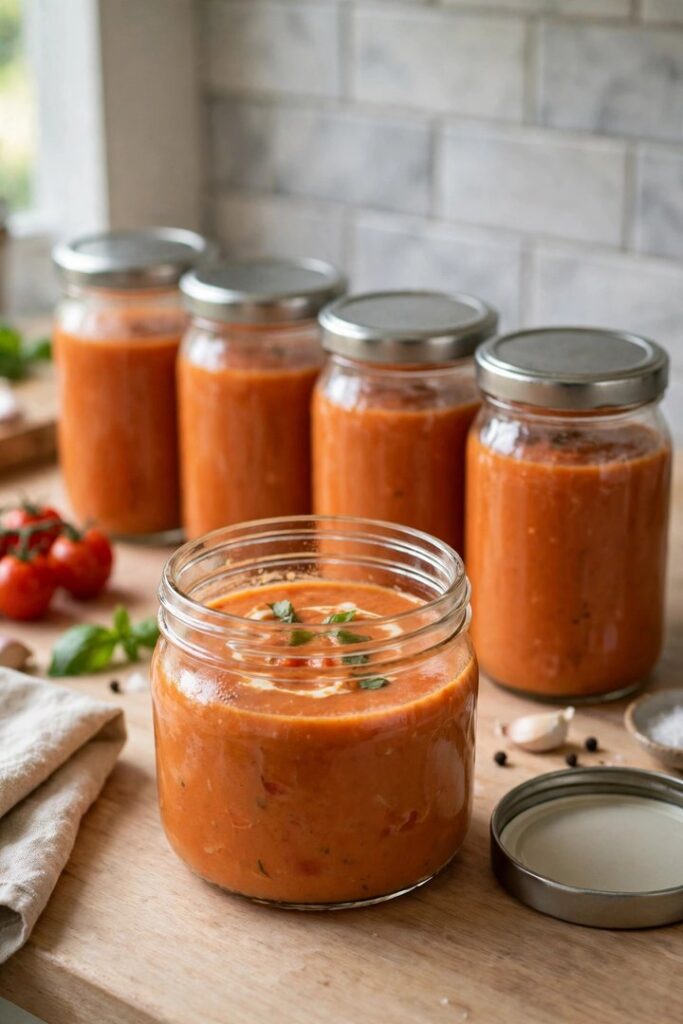
Let the soup cool to room temperature, then pour it into a sealed container and keep it in the fridge for up to 4 days. Stir it well before you reheat it, since the cream can settle a little as it sits.
Freezer
Freeze the soup without the cream if you can, in sealed containers or freezer bags, for up to 3 months. Leave a little space at the top of each container, since the soup expands as it freezes, then thaw it in the fridge and stir in fresh cream as you reheat it.
Reheating
Warm the soup gently in a pot over low heat, stirring often, until it is hot all the way through. Add a splash of vegetable stock if it has thickened in storage, and taste it again for salt before you serve it.
Nutrition Information
Nutrition values are approximate and may vary based on brands and portion sizes.
- Calories: about 180 per serving
- Protein: about 4 g per serving
- Carbohydrates: about 22 g per serving
- Fiber: about 4 g per serving
- Sugar: about 11 g per serving
- Fat: about 9 g per serving
- Saturated fat: about 4 g per serving
- Cholesterol: about 20 mg per serving
- Sodium: about 480 mg per serving
- Vitamin C: about 25 mg per serving
- Calcium: about 80 mg per serving
- Iron: about 1 mg per serving
- Potassium: about 550 mg per serving
Why This Recipe Works
This tomato soup recipe works because it builds flavor in layers, and each layer has a clear job. The onion and garlic soften first and give the soup a savory base, the tomato paste adds depth, and the fresh tomatoes bring the bright flavor that makes the soup taste like tomatoes, not like a jar. Cream and butter come last, so they soften the sharp edges without covering the tomato flavor.
Blending is the other key step. When you blend the cooked tomatoes until they are fully smooth, the soup turns silky and feels rich, even though the ingredient list stays short. I have seen this work well in my own kitchen, and the trick is to taste at the end, after the cream goes in, and adjust the salt and sugar until the soup tastes bright and calm in the same spoonful.
Read Also: Vegetable Soup
Frequently Asked Questions
Can I use canned tomatoes instead of fresh tomatoes?
Yes, you can use canned whole tomatoes in place of fresh ones, and the soup still turns out smooth and full of flavor. Choose plain canned tomatoes with no added herbs or sugar, drain off some of the juice if the can looks very watery, and taste the soup at the end, since canned tomatoes can need a little more sugar or salt than fresh ones.
How do I make this tomato soup recipe dairy free?
Use a plain plant cream and a dairy free butter in place of the heavy cream and butter, and keep the rest of the recipe the same. Taste the soup after you add the plant cream, since some plant creams are thinner than dairy cream, and add a little more if you want a richer texture.
Why does my tomato soup taste too sour?
Sour soup often comes from underripe tomatoes, or from a pot that did not cook long enough for the tomatoes to soften and sweeten. Stir in a small pinch of sugar, add a little more cream, and let the soup simmer gently until the flavors settle, then taste it again before you serve it.
Can I make this tomato soup recipe ahead of time?
Yes, you can make the soup a day or two ahead and keep it in a sealed container in the fridge. In my experience, the flavor improves as it rests, so reheat it gently on the stove, stir it well, and add a splash of vegetable stock if it has thickened while it sat.
How do I know when the soup is ready to blend?
The soup is ready to blend when the tomatoes have broken down, turned soft, and lost their raw, sharp smell. You should be able to press a piece of tomato easily against the side of the pot with a spoon, and the pot should smell sweet and savory, not sharp.
What should I serve with tomato soup?
Grilled cheese is the classic match, and it works well because the crisp bread and melted cheese suit the smooth, warm soup. Crusty bread, a simple green salad, or a cheese toastie also work, so pick the side that fits the meal you have planned.
Conclusion
This tomato soup recipe is the kind of meal you can make on a plain day and still feel proud to serve. It uses fresh tomatoes, a few pantry staples, and a calm, clear method, and it gives you a smooth, creamy bowl that tastes like real food, made with care.
Make a pot when you want something warm and simple, and keep the recipe close for the days when you need a meal that comes together without fuss. For another cozy bowl from this site, try this vegetable soup recipe on a day when you want more vegetables in the pot. Serve your tomato soup warm, with good bread, and enjoy every spoonful.

Tomato Soup
Ingredients
Equipment
Method
- Step 1: Soften the Onion and Garlic
- Step 2: Add the Tomato Paste
- Step 3: Add the Tomatoes and Stock
- Step 4: Simmer Until Soft
- Step 5: Blend Until Smooth
- Step 6: Stir in the Cream and Butter
- Step 7: Add Basil and Serve



7 Comments
Comments are closed.