Baked Potatoes in the Oven Recipe: Crispy, Easy and Golden
There is a small, specific pleasure in cutting into a baked potato and hearing the skin crackle while steam rises from the fluffy flesh inside. Baked potatoes in the oven are one of those simple dishes that reward a little patience, and this recipe gets the two things that matter most right: a skin that is properly crisp and salted, and a centre that is soft enough to fluff with a fork.
These baked potatoes in the oven take 65 minutes from start to finish, with 10 minutes of prep, 50 minutes of baking and a 5 minute rest. The recipe serves 4, one potato per person, and it works as a light dinner on its own or as a side next to grilled chicken or a steak. You wash the potatoes, rub them with oil and salt, and let the oven do the rest, so most of the hour is hands off.
Why You’ll Love These Baked Potatoes
- Crisp, salty skin: Baking the potatoes straight on the oven rack with oil and salt gives you a skin that crackles and tastes like a proper jacket potato, not a steamed one.
- Fluffy centres every time: A full 50 minutes at high heat cooks the flesh right through, so it mashes easily with a fork and holds butter and toppings well.
- Only 10 minutes of hands on work: Washing, drying and rubbing the potatoes takes minutes, and the oven handles the rest while you get on with the toppings or the rest of dinner.
- Endless topping choices: Butter, sour cream, cheese and chives are the classic set, but these baked potatoes in the oven take to almost anything you have in the fridge.
- Cheap and filling: Four large russet potatoes cost very little and make a proper meal, which is handy when the week is long and the budget is short.
Read Also: Mashed Potatoes
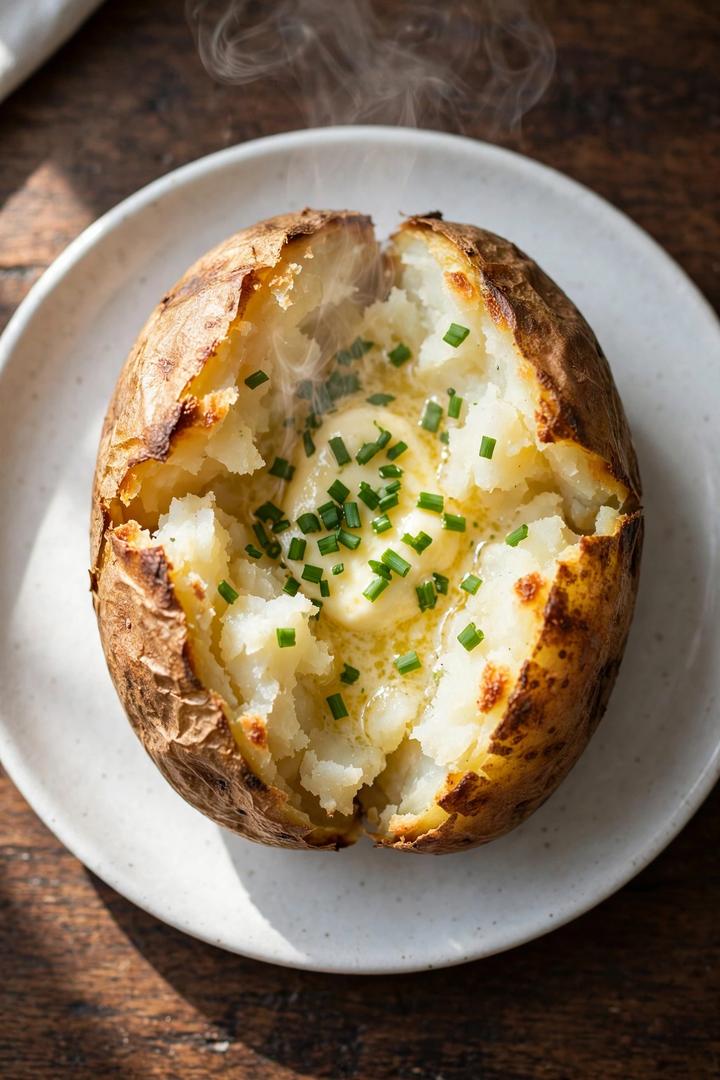
Ingredients You’ll Need
Baked potatoes in the oven need very little, but the potato itself matters more than anything else in the list. Choose russet potatoes, the ones with brown, rough skin and starchy flesh, because they bake up dry and fluffy while waxy potatoes stay dense and wet. Pick four that are roughly the same size, about 250 grams each, so they finish baking at the same time. Everything else is a topping, so keep the butter, sour cream and cheese ready beside the oven while the potatoes bake.
Recipe Timing
| Detail | Value |
|---|---|
| Servings | 4 |
| Difficulty | Easy |
| Course | Side Dish |
| Cuisine | American |
| Prep Time | 10 minutes |
| Cook Time | 50 minutes |
| Rest Time | 5 minutes |
| Total Time | 65 minutes |
Ingredients
- 4 large russet potatoes, about 250 grams each: Starchy flesh bakes up fluffy; choose similar sizes so they cook evenly
- 2 tablespoons olive oil: Rubbed on the skins so they crisp and brown
- 1 teaspoon fine salt: Seasons the skin and helps it crisp
- 4 tablespoons butter: For filling the hot potatoes; salted or unsalted both work
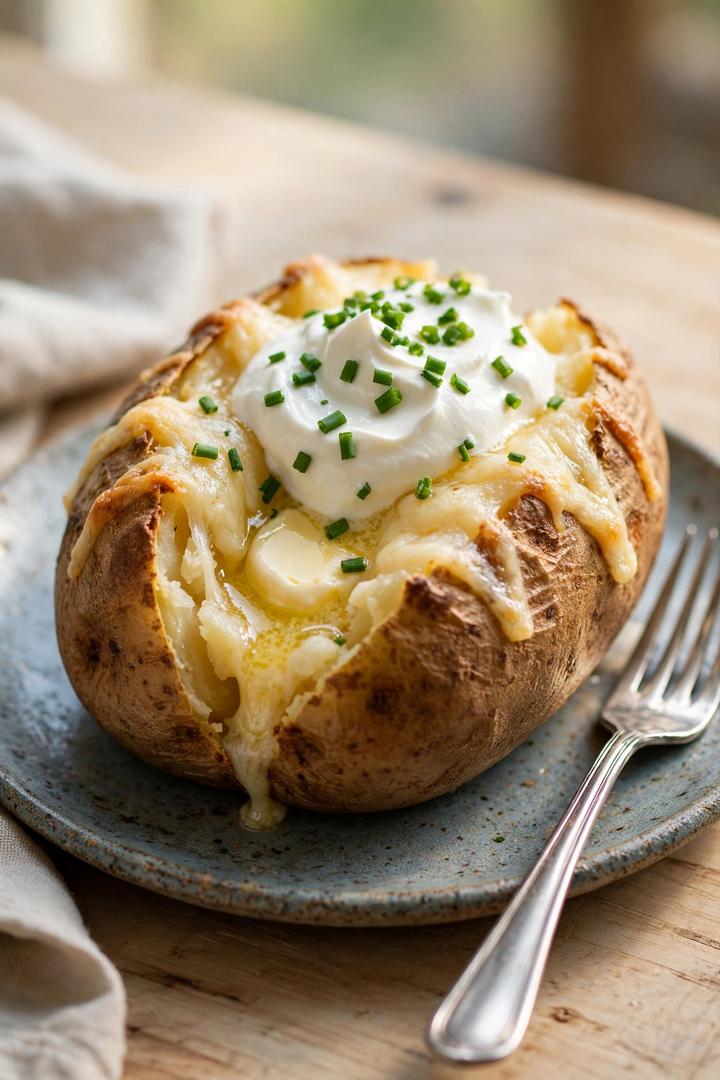
- 1/2 cup sour cream: A cool, tangy topping that melts slightly into the flesh
- 1/2 cup cheddar cheese, grated: Melts into the hot potato; grate it fresh for the smoothest melt
- 2 tablespoons fresh chives, chopped: A mild onion flavour scattered over the top
- 1/2 teaspoon black pepper: Freshly ground, for seasoning the filling
Read Also: Roasted Potatoes
Allergen & Dietary Disclosure
This recipe contains milk, from the butter, sour cream and cheddar cheese used as toppings. It contains no egg, no wheat, no nuts and no fish as written, so it suits a gluten free table as long as every topping label is checked before serving. It is not guaranteed safe for any specific allergy. For a dairy free version, swap the butter for 2 tablespoons of olive oil, use 1/2 cup of dairy free sour cream style topping and 1/2 cup of dairy free grated cheese, keeping in mind the flavour will be a little lighter and the cheese may melt less smoothly.
Equipment Needed
- Oven: Baked at 220 degrees Celsius, which is 425 degrees Fahrenheit, so check your oven runs true with a thermometer if your baking often runs slow.
- Wire rack: Lets hot air reach all sides of each potato, which is what makes the skin crisp all the way round.
- Baking sheet: Sits under the rack to catch any salt or oil drips and keep the oven floor clean.
- Fork: For pricking the potatoes before baking and for fluffing the flesh once they are split open.
- Sharp knife: For cutting the potatoes open along the top after they rest.
- Oven mitts or tongs: For lifting the hot potatoes off the rack without burning your hands.
- Small bowls: For holding the butter, sour cream, cheese and chives ready while the potatoes bake.
Step-by-Step Directions
Step 1: Choose and Wash the Potatoes
Pick four russet potatoes that are close in size and free of green patches or deep sprouts, then scrub each one under cold running water with a vegetable brush until the skin is clean. Rough brown skin hides a lot of dirt, so take your time here. Pat them dry with a clean tea towel. Chef’s Note: potatoes of the same size finish at the same time, so if one is much larger than the rest, save it for another meal and pick a closer match instead.
Step 2: Dry the Skins Completely
Lay the washed potatoes on a clean towel and dry them well on every side. Wet skin steams in the oven instead of crisping, so this step is worth the extra minute. If the potatoes still feel damp, leave them on the towel for a few minutes while the oven heats. The skins should feel dry to the touch before any oil goes on.
Step 3: Oil and Salt the Skins
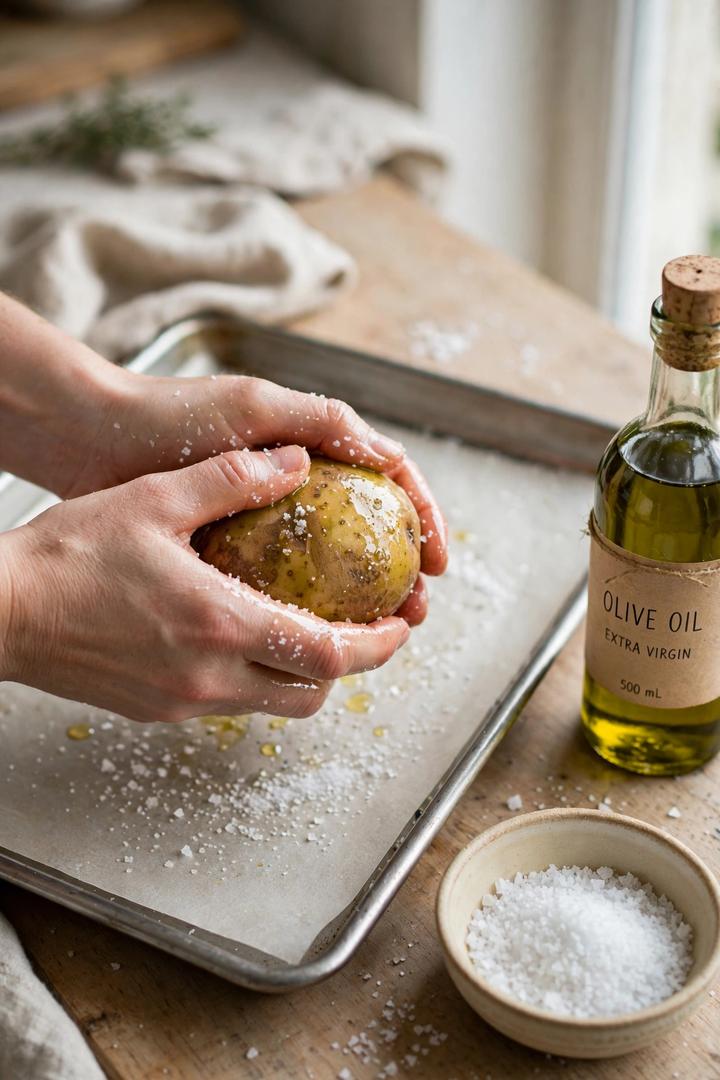
Pour the olive oil into your hands and rub it over each potato until the skin is coated all over, then sprinkle the fine salt evenly over the oiled skins. The oil carries the heat to the skin and helps it brown, while the salt seasons the outside and draws out a little moisture so the skin dries and crisps. Set the potatoes on the wire rack over the baking sheet, with space between them so the hot air can move around each one.
Step 4: Bake Directly on the Rack
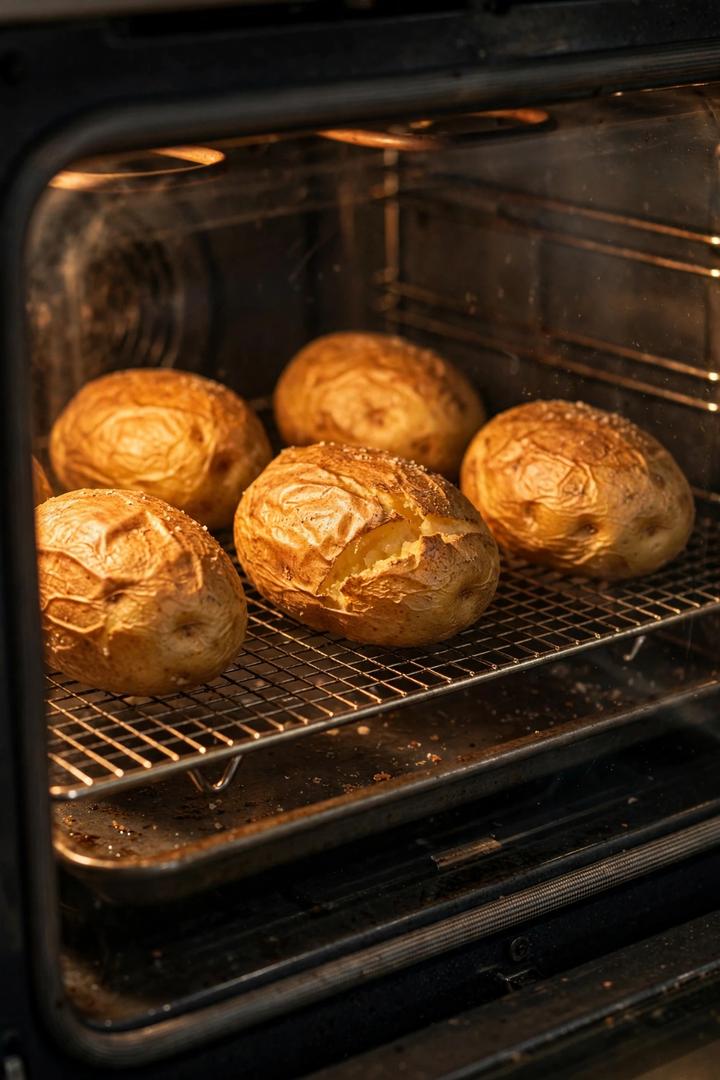
Slide the rack and baking sheet into the middle of the preheated oven at 220 degrees Celsius, 425 degrees Fahrenheit, and bake for 50 minutes without opening the door. Baked potatoes in the oven need that steady high heat, and opening the door drops the temperature and softens the skins. The potatoes will smell nutty and the skins will look dry and slightly wrinkled when they are close to done. Chef’s Note: never wrap the potatoes in foil for this recipe, since foil traps steam around the skin and turns it soft and soggy instead of crisp.
Step 5: Test for Doneness
After 50 minutes, press the side of a potato gently with an oven mitt. A done potato gives easily under your fingers, and a fork pushed into the centre should slide in with no resistance at all. If the fork meets a firm spot in the middle, give the potatoes 5 to 10 minutes more and test again. Chef’s Note: the squeeze test is the most reliable check, since a potato can look done on the outside while the centre is still firm, so trust your fingers and the fork, not the clock alone.
Step 6: Rest, Split and Fluff
Take the potatoes out of the oven and let them rest for 5 minutes on the rack. The rest lets the steam inside settle so the flesh stays fluffy instead of wet when you cut in. Cut a slit along the top of each potato with a sharp knife, then push the ends gently towards the centre so the potato opens up. Run a fork through the flesh in short strokes to fluff it up, which also makes room for the butter and toppings to sink in.
Step 7: Fill and Serve
Drop a tablespoon of butter into each hot potato and let it melt into the fluffed flesh, then season with a little black pepper. Spoon over the sour cream, scatter the grated cheddar so it melts on contact, and finish with the chopped chives. Serve the potatoes straight away on warm plates, while the skins are still crisp and the cheese is just melting.
Common Mistakes & Troubleshooting
Most baked potatoes in the oven go wrong for one of a few reasons: soft skins, a firm centre, or a wet, dense filling. Each one has a simple fix.
| Problem | Cause | Solution |
|---|---|---|
| Skin soft and soggy | Potatoes wrapped in foil, or skins went in wet | Bake unwrapped on a wire rack, and dry the skins fully before oiling |
| Centre still firm | Potatoes underbaked, or oven running cool | Bake 5 to 10 minutes longer and test with a fork until it slides in easily |
| Flesh wet and dense | Waxy potatoes used, or potato cut open too soon | Use russet potatoes and rest for 5 minutes before splitting |
| Skin burnt in spots | Oven too hot, or potatoes too close to the top element | Keep the rack in the middle of the oven and check the temperature |
| Toppings slide off | Flesh not fluffed before filling | Fluff the centre with a fork first so the butter and toppings sink in |
Variations & Substitutions
- Cheese and chive classic: Keep the recipe as written, with butter, sour cream, cheddar and chives, for the version most people expect.
- Chilli cheese baked potatoes: Spoon over warm chilli made with ground beef or beans, then add grated cheddar and a dollop of sour cream.
- Garlic butter version: Stir 1 minced garlic clove and 1 tablespoon of chopped parsley into the butter before it goes into the potato.
- Loaded veggie version: Top with steamed broccoli, grated cheese and sour cream for a filling meat free dinner.
- Sweet potato swap: Use large sweet potatoes instead of russets, bake for the same 50 minutes, and top with butter and a pinch of cinnamon.
- Smaller potatoes for a crowd: Use 8 small russets instead of 4 large ones, cut the bake time to about 35 minutes, and set them out as a side dish buffet so guests fill their own.
Serving Suggestions
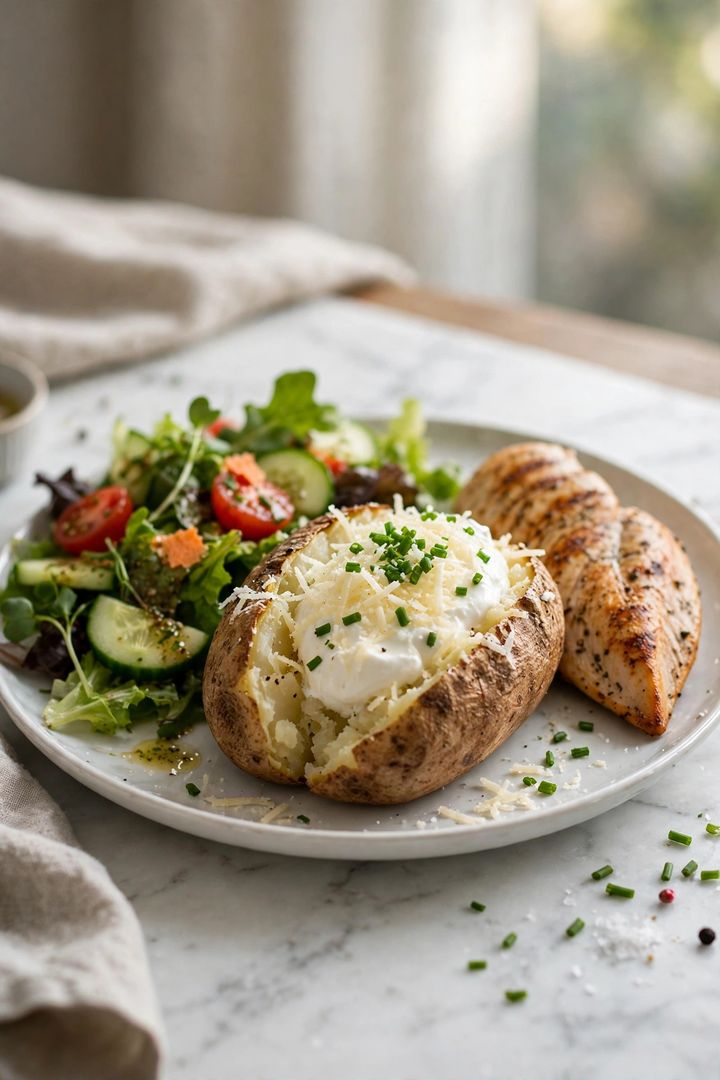
Serve these baked potatoes in the oven as a side next to grilled chicken, steak, or a simple green salad, or make them the main event with a hearty topping like chilli or steamed broccoli and cheese. A crisp salad with a lemon dressing keeps the plate light beside the rich potato, and warm bread is unnecessary, since the potato itself is the starch on the plate.
Tips for the Best Results
- Pick russets, not waxy potatoes: Starchy russet flesh bakes up dry and fluffy, while waxy potatoes stay firm and wet inside.
- Dry the skins well: Wet skin steams instead of crisping, so pat each potato dry and let it air dry for a few minutes if needed.
- Bake on a rack, not a tray: Hot air under the potato crisps the bottom skin too, which a flat tray cannot do.
- Do not wrap in foil: Foil traps steam and gives you a soft, pale skin, so leave the potatoes unwrapped for the whole bake.
- Salt the outside: Salt on the skin seasons it and helps it dry out and crisp in the heat.
- Fluff before filling: Running a fork through the flesh makes space for butter and toppings and keeps the centre light instead of packed down.
- Serve them hot: Baked potatoes in the oven lose their crisp skin as they cool, so fill and serve them within a few minutes of the rest.
Storage Tips
Refrigerator
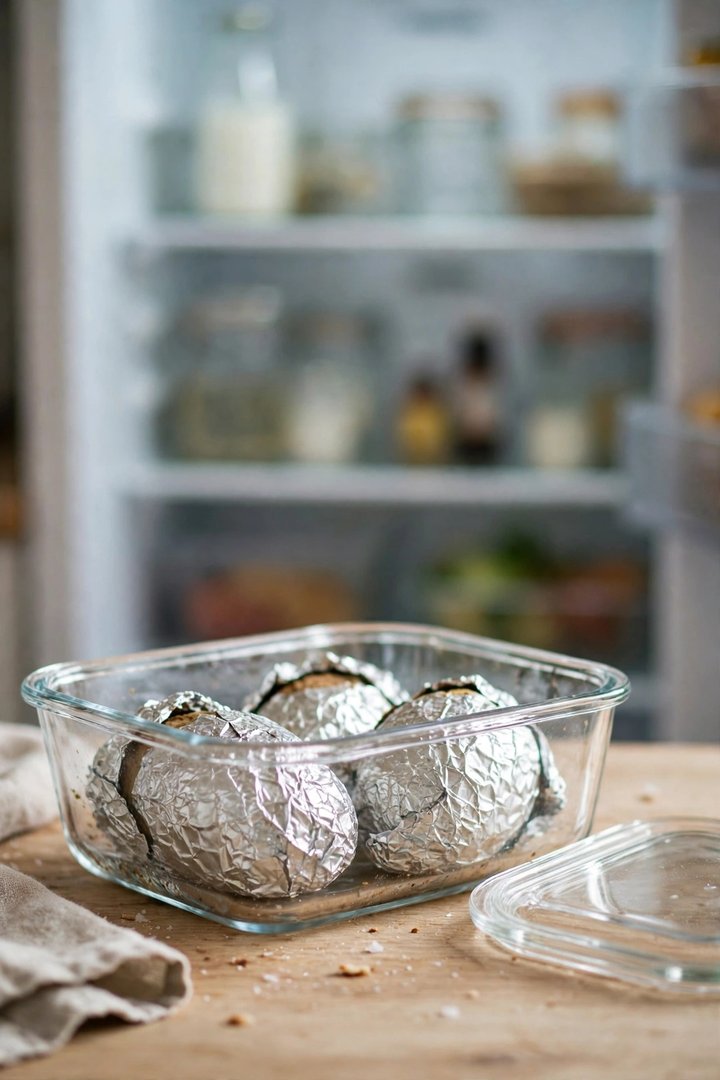
Cool the potatoes completely, then store them in an airtight container in the fridge for up to 4 days. Keep the toppings separate, since sour cream and cheese do not hold up well when stored on a baked potato. The skins will soften in the fridge, which is normal, and they crisp up again when reheated in the oven.
Freezer
Freeze baked potatoes for up to 2 months, without toppings, wrapped one by one in foil and then placed in a freezer bag. Thaw them overnight in the fridge before reheating, and expect the skin to be softer than a fresh batch, since freezing changes the texture of the flesh slightly.
Reheating
Reheat the potatoes in the oven at 200 degrees Celsius, 400 degrees Fahrenheit, for 15 to 20 minutes, until hot all the way through and the skin crisps again. The microwave is faster, about 2 to 3 minutes per potato, but it leaves the skin soft, so use the oven when you want the crisp skin back. Add fresh toppings only after reheating.
Nutrition Information
Values are per serving, one baked potato with butter, sour cream, cheddar and chives out of four, as written.
- Calories: 320
- Carbohydrates: 42 grams
- Protein: 7 grams
- Fat: 14 grams
- Sugar: 2 grams
- Fibre: 4 grams
- Sodium: 380 milligrams
Nutrition values are approximate and may vary based on brands and portion sizes.
Why This Recipe Works
Baked potatoes in the oven work because the method treats the skin and the flesh as two separate jobs. High, steady heat on a wire rack dries the skin out and crisps it, while the same heat slowly turns the starchy centre soft and fluffy. Oil and salt on the outside help the skin brown and season it, and skipping the foil keeps steam from undoing all of that. In my experience, the rack is the part people skip most often, and it is the part that makes the biggest difference to the skin.
The rest matters too. Five minutes off the heat lets the steam inside settle, so the flesh stays fluffy instead of turning wet when you cut the potato open. Fluffing with a fork before the butter goes in makes room for the toppings to sink down into the potato instead of sliding off the top. Nothing here is fancy, and that is the point: a few plain steps, done in the right order, give you a baked potato that tastes like it came from a steakhouse.
Read Also: Twice Baked Potatoes
Frequently Asked Questions
How long do baked potatoes take in the oven?
Baked potatoes in the oven take 50 minutes at 220 degrees Celsius, 425 degrees Fahrenheit, plus 10 minutes of prep and a 5 minute rest, so 65 minutes in total. Large russets need the full time, and the surest check is a fork sliding into the centre with no resistance. If your potatoes are bigger than about 250 grams each, add 5 to 10 minutes and test again.
Do I need to wrap baked potatoes in foil?
No, and you should not wrap them for this recipe. Foil traps steam around the skin, which keeps it soft and pale instead of crisp. Bake the potatoes unwrapped, straight on a wire rack, so hot air reaches every side and the skin dries out and crisps. Save foil for storing leftovers, not for baking.
Can I make baked potatoes ahead of time?
Yes, bake them fully, cool them, and store them in the fridge for up to 4 days without toppings. Reheat them in the oven at 200 degrees Celsius, 400 degrees Fahrenheit, for 15 to 20 minutes, which crisps the skin again, then add fresh butter, sour cream, cheese and chives. Do not reheat them in the microwave if you want the skin crisp, since the microwave softens it.
Why is my baked potato skin soft instead of crispy?
Soft skin usually comes from one of three things: the potatoes were wrapped in foil, the skins went into the oven wet, or the potatoes sat on a flat tray instead of a rack. Dry the skins fully, rub them with oil and salt, bake them unwrapped on a wire rack in the middle of the oven, and keep the door shut for the full 50 minutes. Each of those steps helps the skin dry and crisp.
What toppings go well on baked potatoes?
Butter, sour cream, grated cheddar and chives are the classic set, and they are what this recipe uses. Chilli, steamed broccoli with cheese, sauteed mushrooms, or a spoonful of baked beans all work well too. Keep the toppings simple and add them while the potato is hot, so the cheese melts and the butter sinks into the fluffed flesh.
Are baked potatoes gluten free?
Yes, baked potatoes are naturally gluten free as written, since the recipe has no wheat in it. The potatoes, oil, salt, butter, sour cream, cheese and chives are all gluten free on their own, but check the labels on your sour cream and cheese before serving, since some brands add thickeners. For a dairy free version, use olive oil instead of butter and dairy free sour cream and cheese.
Conclusion
Baked potatoes in the oven are a quiet kind of cooking: ten minutes of work, an hour in the oven, and a plate that needs nothing fancy to feel like a proper meal. Crisp salted skin, fluffy flesh, and toppings that melt into the middle make this one of the most forgiving recipes in the kitchen, and once you have the rack and the timing right, it comes out the same way every time.
Make a batch this week and see how far four potatoes go. Serve them beside grilled chicken or a salad, or load them up and call it dinner on its own. If you like potato dishes that fill a plate, try our Ground Beef Potato Skillet for another easy weeknight option built around the same humble ingredient. Keep this recipe close, and a simple potato will never be boring again.
Baked Potatoes in the Oven
Ingredients
Method
- Select four similar sized russets without green patches, scrub them clean under cold water with a brush, and pat them dry with a tea towel
- Set the potatoes on a clean towel and dry every side well, since damp skin steams in the oven instead of turning crisp
- Rub olive oil over each potato with your hands, sprinkle the salt evenly over the skins, and place them spaced out on a wire rack over a baking sheet
- Put the rack in the middle of the oven at 220 degrees Celsius, 425 degrees Fahrenheit, and bake for 50 minutes without opening the door
- Press a potato gently with an oven mitt and push a fork into the centre, and if it still feels firm, bake for 5 to 10 minutes more
- Rest the potatoes for 5 minutes, cut a slit along the top of each one, push the ends in to open them, and fluff the flesh with a fork
- Add a tablespoon of butter to each potato, season with black pepper, spoon over sour cream, scatter the cheddar and chives, and serve hot



2 Comments
Comments are closed.