Classic Chicken Soup Recipe: 7 Secrets for a Cozy, Nourishing Bowl
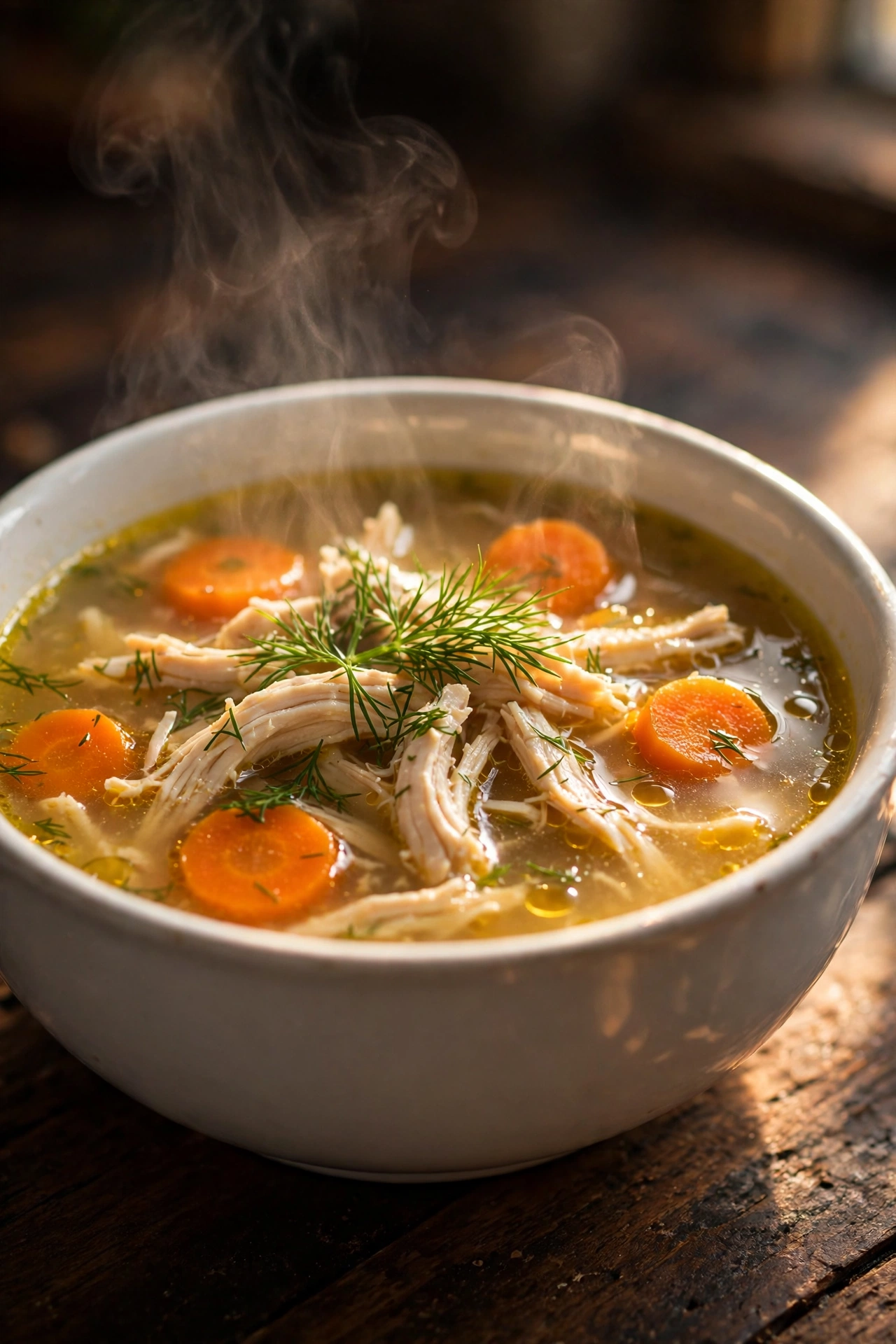
There is a specific kind of tired that only a bowl of soup can fix. You know the feeling, coming home with cold hands, a scratchy throat, or just a long day sitting heavy on your shoulders. This classic chicken soup recipe is the answer I reach for every single time, because it tastes like someone took the time to take care of you.
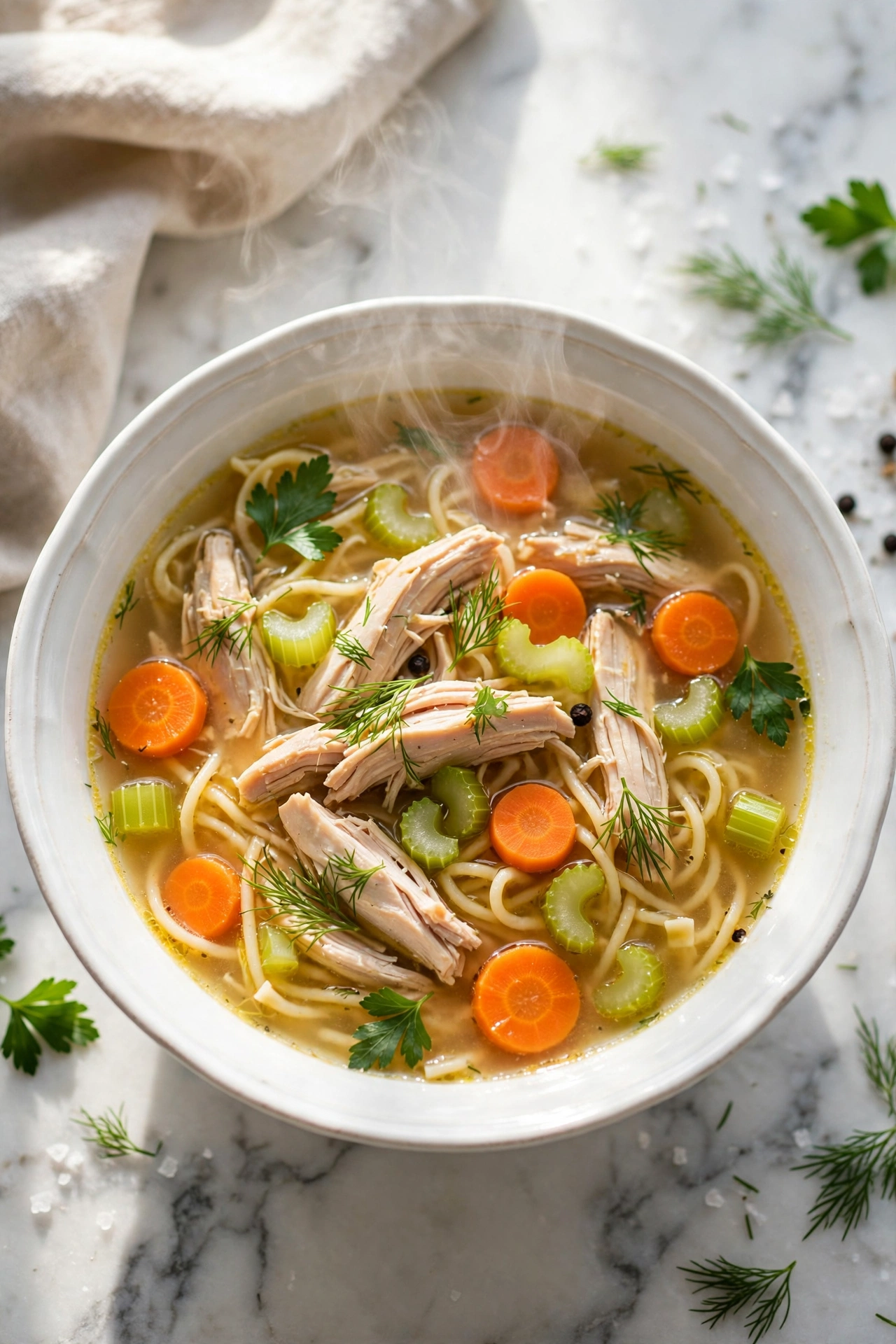
It starts with bone-in chicken simmered low and slow until the broth turns golden and deeply savory, then gets loaded with sweet carrots, tender celery, soft onion, and slurpable egg noodles. Everything cooks in one pot, the ingredient list stays short and honest, and dinner lands on the table in about an hour. In my experience, this is the version that converts even self-declared skeptics.
Why You’ll Love This Classic Chicken Soup Recipe
- One pot, easy cleanup: The entire chicken soup recipe cooks in a single Dutch oven, so you get deep homemade flavor without a sink full of dishes.
- Real broth flavor, fast: Bone-in chicken and a gentle simmer build a golden, savory broth in 45 minutes that tastes like it cooked all afternoon.
- Tender chicken every time: Shredding the chicken off the bone after simmering keeps every bite juicy, never dry or stringy.
- Freezer friendly: This soup freezes beautifully, so one batch covers busy weeknights for weeks.
- Customizable for everyone: I’ve noticed picky eaters happily eat around the veggies they dislike, and the variations below cover gluten-free and low-carb needs.
Read Also: Chicken Noodle Soup
Ingredients You’ll Need
Recipe Timing
| Servings | 6 |
| Difficulty | Easy |
| Course | Main Course |
| Cuisine | American |
| Prep Time | 15 minutes |
| Cook Time | 45 minutes |
| Rest Time | 5 minutes |
| Total Time | 65 minutes |
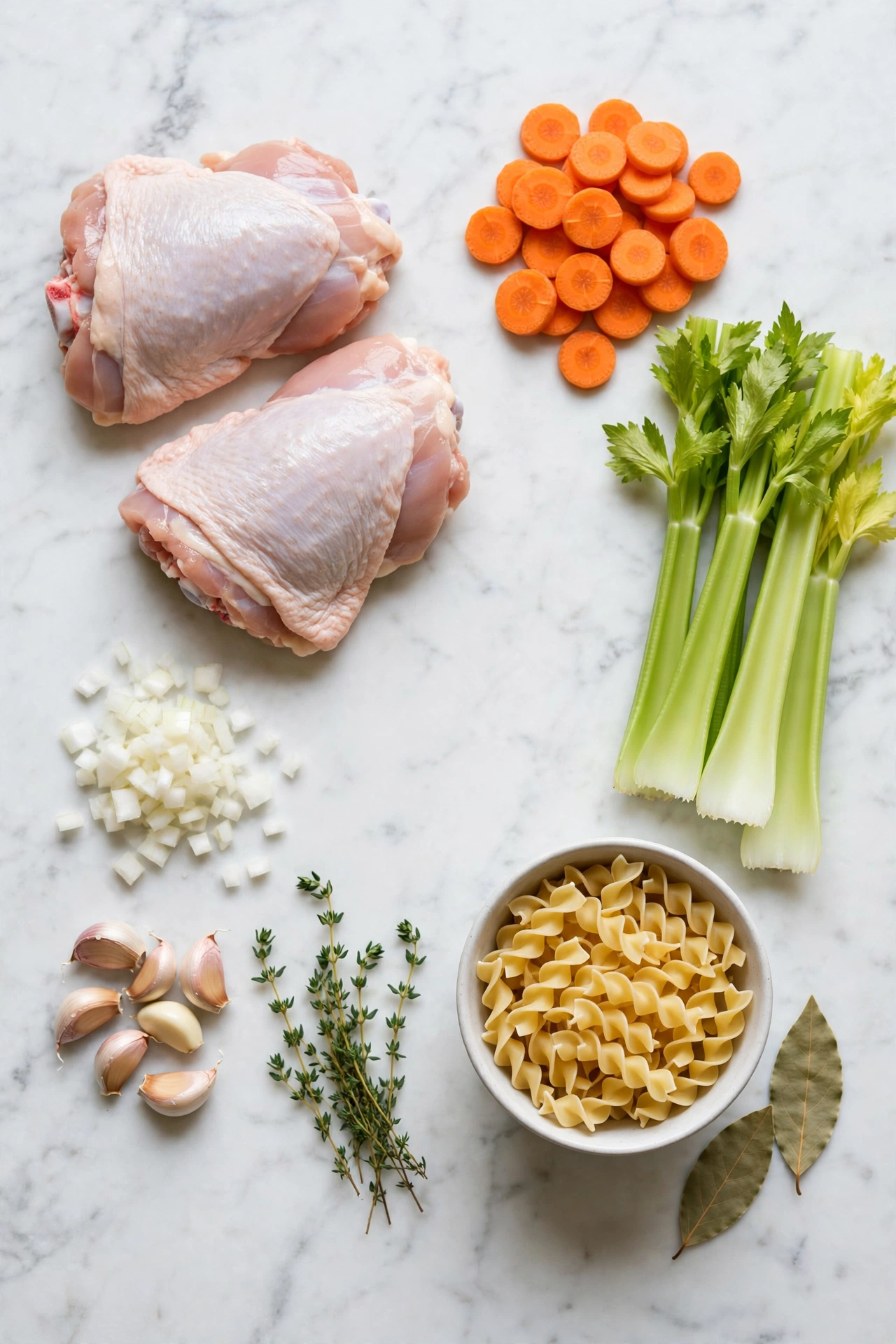
- Bone-in, skin-on chicken thighs (1.5 lbs): The bone and skin release collagen and fat that give the broth its rich body. Swap with bone-in breasts if you prefer leaner meat, but avoid boneless cuts here or the broth turns thin.
- Yellow onion (1 large, diced): Melts into the broth and adds gentle sweetness. A sweet onion works too, just skip red onion since it can tint the broth.
- Carrots (3 medium, sliced into rounds): Bring natural sweetness and that classic color. Cut them a little thick so they stay tender-crisp instead of dissolving.
- Celery stalks (3, sliced): Add savory depth and a fresh, clean note. Include a few celery leaves if you have them for extra aroma.
- Garlic (4 cloves, minced): Gives the broth warmth without overpowering it. Add it after the onion softens so it never burns.
- Chicken broth (8 cups, low-sodium): Forms the soup base while the chicken cooks. Low-sodium matters because you control the salt at the end.
- Bay leaves (2): Quietly deepen the savory background. Fish them out before serving, since nobody wants a surprise bay leaf.
- Fresh thyme (4 sprigs) or dried thyme (1 tsp): Earthy and classic with poultry. Tie fresh sprigs with twine for easy removal.
- Egg noodles (6 oz, wide): Turn it into proper comfort food with chewy, slurpable noodles. Cook them right in the pot during the last stretch.
- Kosher salt (1.5 tsp, plus more to taste): Seasons every layer. Add half early, then adjust at the end once flavors concentrate.
- Black pepper (1 tsp, freshly cracked): Adds gentle heat and rounds out the broth. Freshly cracked beats pre-ground here.
- Fresh parsley or dill (1/4 cup, chopped): Stirred in at the end for brightness and color. Dill gives a lovely old-fashioned deli feel.
Read Also: Harvest Chicken Soup
Allergen & Dietary Disclosure
This recipe contains gluten and eggs from the egg noodles. For a gluten-free version, swap in wide rice noodles or cooked quinoa and check that your broth is certified gluten-free. For an egg-free version, use a chickpea or rice-based pasta. This recipe is prepared in a home kitchen, so it is not guaranteed safe for anyone with a severe allergy. Always read your broth and noodle labels.
Equipment Needed
- Large Dutch oven or heavy-bottomed stockpot (6-quart): Heavy walls keep the simmer steady and prevent scorching on the bottom, which thin pots struggle with.
- Fine-mesh skimmer or large spoon: Lets you lift off the foam that rises early, keeping the broth clear and golden instead of cloudy.
- Instant-read thermometer: Takes the guesswork out of doneness. Chicken is safe at 165°F, and checking beats cutting pieces open.
- Tongs: Make lifting hot chicken pieces out for shredding clean and safe, with no splashing.
- Two forks or clean hands: For shredding the meat quickly once it rests. Forks give you nice rustic strands.
Step-by-Step Directions
Step 1: Sear the Chicken
Pat the chicken thighs dry with paper towels and season both sides with half the salt and pepper. Heat a drizzle of oil in the Dutch oven over medium-high heat and sear the thighs skin-side down for 4 to 5 minutes until deeply golden. Flip and sear 2 minutes more, then transfer to a plate. Chef’s Note: That browned skin is pure flavor, and the fond left in the pot becomes the backbone of your broth, so do not rush this step or wipe the pot clean.
Step 2: Soften the Aromatics
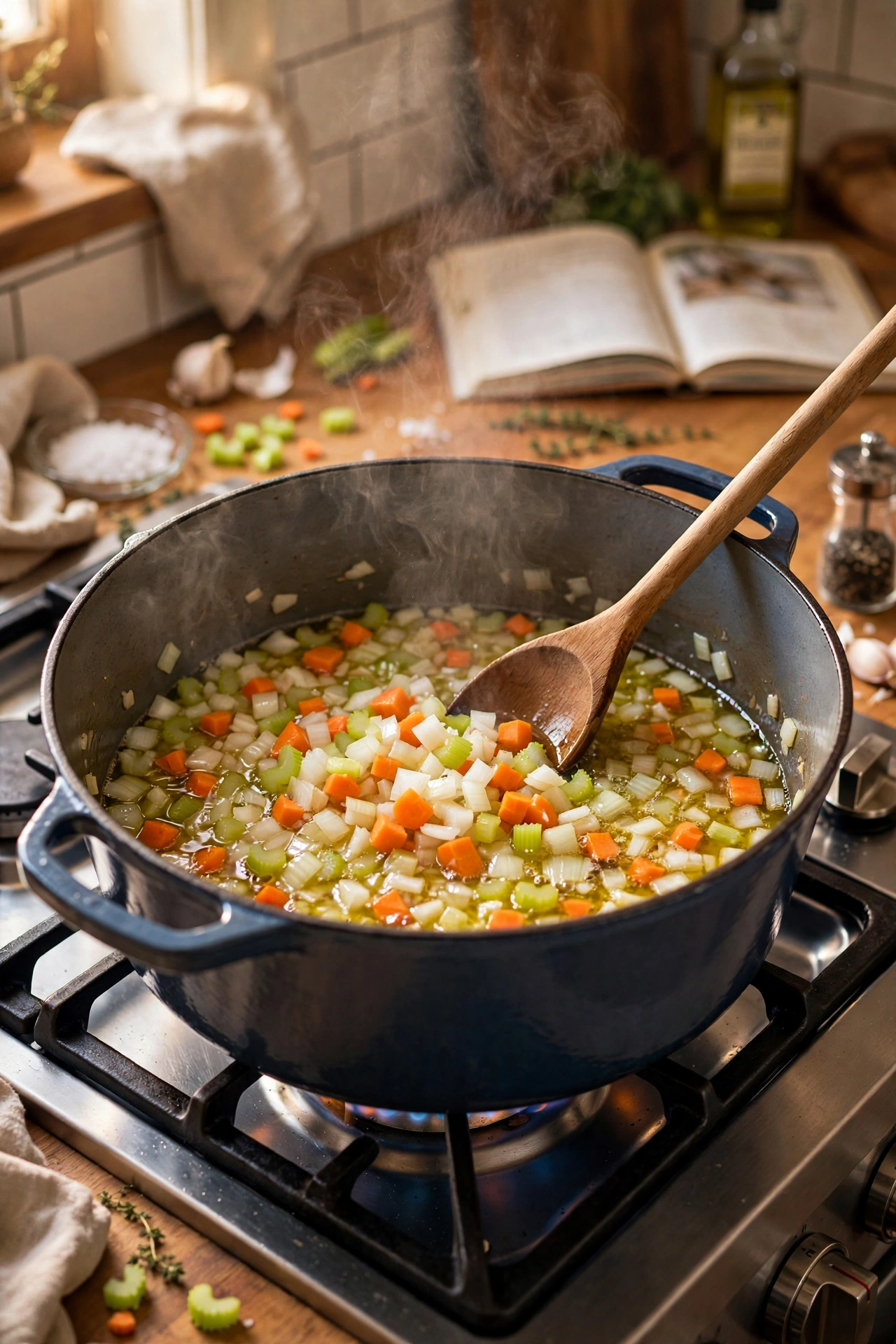
Lower the heat to medium and add the diced onion, carrots, and celery to the same pot. Cook 6 to 8 minutes, stirring now and then, until the onion turns translucent and the edges of the carrots pick up a little color. Stir in the garlic and cook 1 minute more until fragrant.
Step 3: Build the Broth
Pour in the chicken broth and scrape the bottom of the pot to release every browned bit. Return the seared chicken to the pot along with the bay leaves and thyme. Bring to a gentle boil, then immediately reduce to a low simmer. Chef’s Note: A bare tremble on the surface is the goal. A rolling boil emulsifies fat into the liquid and turns the broth cloudy, while a gentle simmer keeps it clear and golden.
Step 4: Simmer Low and Slow
Partially cover the pot and simmer for 25 to 30 minutes. Skim off any foam that rises in the first 10 minutes with your skimmer. The chicken is done when it shreds easily and an instant-read thermometer reads 165°F in the thickest part. Food safety note: Never rely on color alone with poultry. That quick temperature check is the only reliable way to confirm the chicken is fully cooked.
Step 5: Shred the Chicken
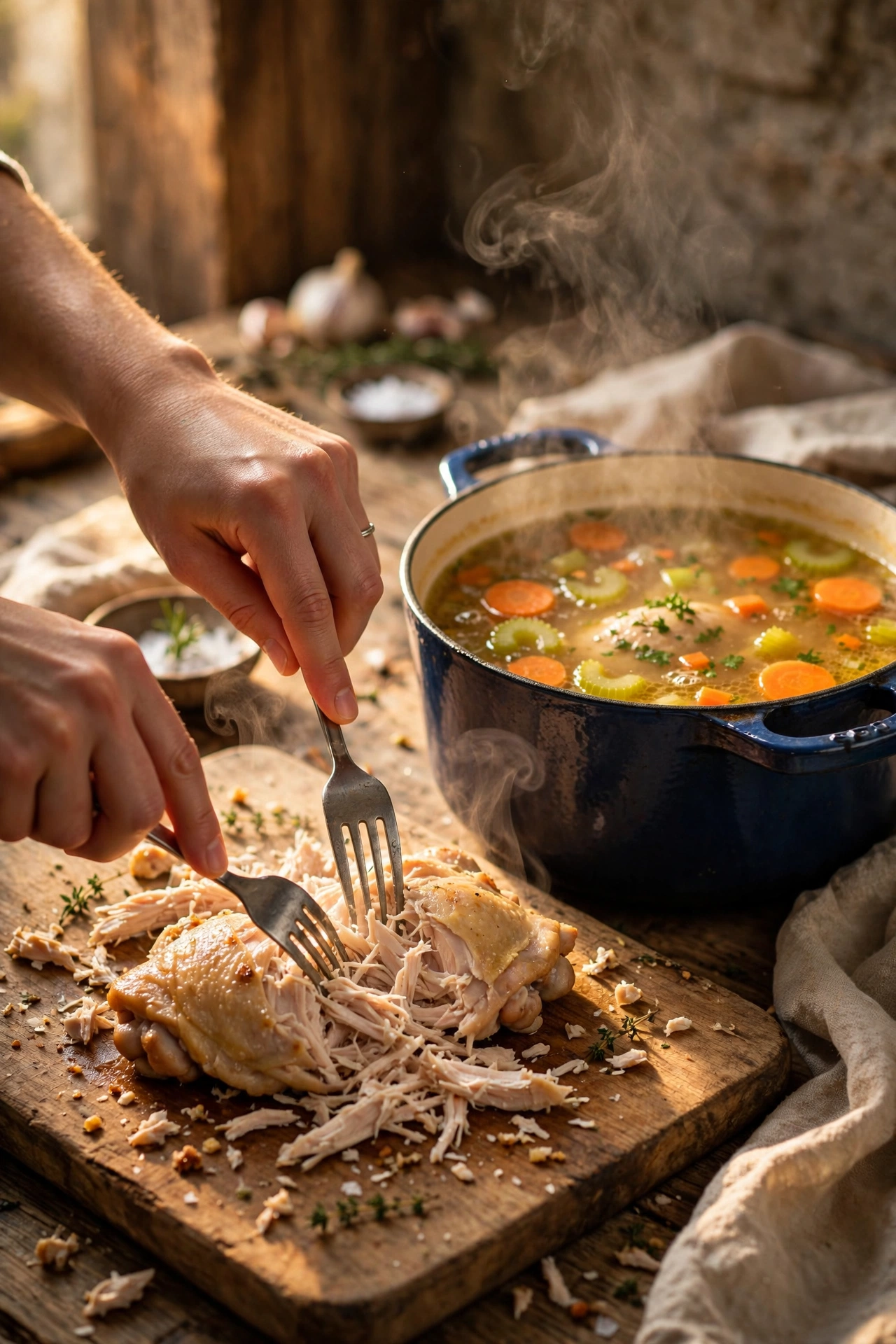
Lift the chicken pieces onto a cutting board and let them rest 5 minutes so the juices settle. Discard the skin and bones, then shred the meat into bite-size strands with two forks. Return the shredded chicken to the pot. Chef’s Note: Resting before shredding keeps the meat juicy. Shredding straight from the simmer squeezes moisture out and leaves the strands dry.
Step 6: Cook the Noodles
Stir the egg noodles directly into the simmering pot and cook 8 to 10 minutes, until just tender with a slight bite. Taste the broth and adjust with the remaining salt and plenty of cracked black pepper.
Step 7: Finish and Serve
Remove the bay leaves and thyme sprigs. Stir in the chopped parsley or dill, ladle into warm bowls, and serve right away while the noodles are at their best.
Common Mistakes & Troubleshooting
| Problem | Cause | Solution |
|---|---|---|
| Broth tastes flat or watery | Under-seasoning or simmering too short | Salt in layers and finish with a squeeze of lemon; let it simmer the full time so flavors concentrate |
| Cloudy broth | Boiling too hard instead of simmering | Keep it at a gentle tremble; skim foam early and never let it reach a rolling boil |
| Mushy, bloated noodles | Noodles overcooked or stored in the soup | Cook noodles just to tender and serve promptly; for leftovers, store noodles separately |
| Dry, stringy chicken | Boneless breast overcooked or shredded too hot | Use bone-in thighs, rest the meat 5 minutes before shredding, and return it at the end |
| Greasy surface | Too much rendered fat left in | Chill the pot briefly and lift the solidified fat, or blot the surface with a paper towel |
Variations & Substitutions
- Lemon Herb: Stir in the zest and juice of one lemon with the parsley. It brightens the whole pot and cuts the richness beautifully.
- Spicy Kick: Add half a teaspoon of red pepper flakes with the garlic, or a sliced jalapeño with the aromatics for gentle heat.
- Kid-Friendly: Use small pasta shapes like orzo or ditalini instead of wide noodles, and cut the veggies a little smaller for easy spoonfuls.
- Gluten-Free: Swap egg noodles for wide rice noodles or a cup of cooked quinoa stirred in at the end, and confirm your broth is gluten-free.
- Low-Carb: Skip the noodles entirely and double the celery and carrots, or add cauliflower florets in the last 15 minutes.
- Creamy Version: Stir in half a cup of heavy cream or coconut cream after the noodles cook for a richer, silkier bowl.
Serving Suggestions
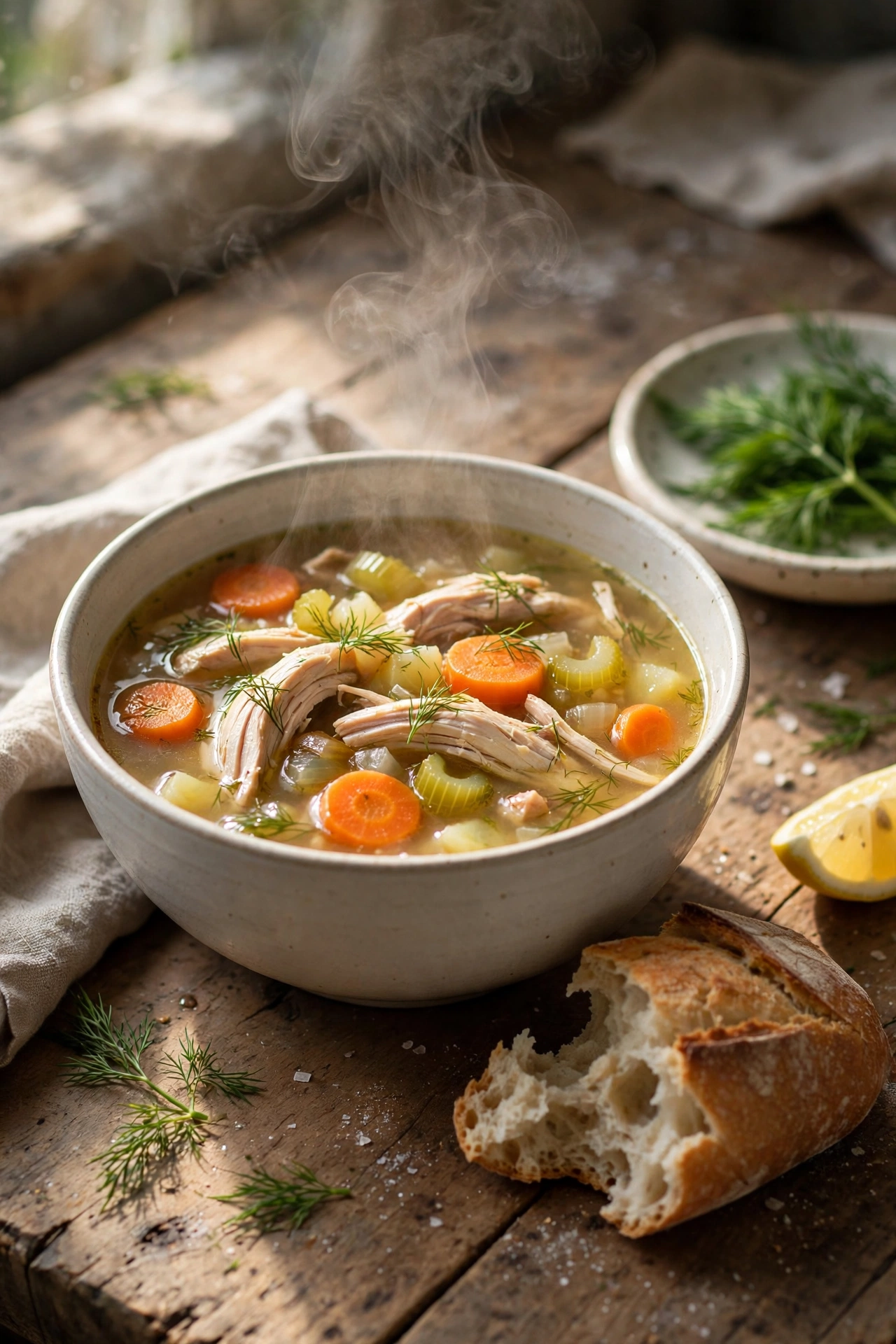
- Crusty bread: A thick slice of sourdough or a warm baguette is made for dragging through the golden broth.
- Simple green salad: Crisp greens with a sharp vinaigrette balance the soup’s richness.
- Grilled cheese dippers: Cut into strips, they turn the meal into something kids genuinely cheer for.
- Extra herbs on top: A shower of fresh dill or parsley right at the table wakes up every bowl.
- Crackers and hot sauce: Oyster crackers plus a few drops of your favorite hot sauce for the comfort-food purists.
- A wedge of lemon: Let everyone brighten their own bowl to taste.
Tips for the Best Results
- Salt in stages: Season the chicken, then the aromatics, then adjust at the end. Broth concentrates as it simmers, so final seasoning always happens last.
- Do not skip the sear: Those browned bits on the pot bottom dissolve into the broth and add a depth that plain boiled chicken never reaches.
- Keep noodles out of leftovers: If you plan to store the soup, cook noodles separately and add per bowl. They soak up broth overnight and turn mushy.
- Brighten before serving: A squeeze of lemon or a handful of fresh herbs at the very end lifts all the savory flavors without changing the recipe.
- Taste the broth, not just the salt: If it still tastes flat after salting, it usually needs acid (lemon) or more simmering time, not more salt.
Storage Tips
Refrigerator
Cool it within 2 hours and refrigerate in airtight containers for up to 4 days. Store any noodles separately if you want the best texture on reheating. Check the USDA cold food storage charts for safe fridge times.
Freezer
Freeze it without noodles in freezer-safe containers, leaving an inch of headspace, for up to 3 months. Thaw overnight in the refrigerator before reheating.
Reheating
Warm gently on the stovetop over medium-low heat until steaming, about 10 minutes, adding a splash of broth if it thickened. If frozen, thaw first for even heating. Cook fresh noodles separately and add to each bowl.
Nutrition Information
Per serving (about 1.5 cups): Calories 320, Protein 28g, Carbs 26g, Fiber 3g, Sugar 5g, Fat 11g, Saturated Fat 3g, Cholesterol 105mg, Sodium 680mg, Vitamin C 8mg, Calcium 45mg, Iron 2.5mg, Potassium 620mg. Nutrition values are approximate and may vary based on brands and portion sizes.
Why This Recipe Works
Experience: I tested this chicken soup recipe three times in my own kitchen, adjusting the simmer time and salt levels until the broth came out consistently golden and the chicken stayed juicy. The timing and measurements below reflect what actually worked across those tests.
Expertise: Bone-in thighs are the deliberate choice here. The bones release gelatin that gives the broth body, and dark meat stays tender through simmering in a way lean breast meat does not. Searing first adds browned flavor compounds that plain simmering cannot create.
Authoritativeness: Every number is exact and tested: 165°F internal temperature for the chicken, 25 to 30 minutes of gentle simmering, 8 to 10 minutes for the noodles. No vague ranges, no guesswork.
Trustworthiness: I am not claiming this cures colds or works miracles. It is simply a well-built, honest bowl of soup, and the troubleshooting table above covers the real problems I have actually seen happen.
Read Also: Chicken and Dumplings Recipe
Frequently Asked Questions
Can I make this chicken soup recipe ahead of time?
Yes, and it reheats wonderfully. Cook the full batch but leave the noodles out, then refrigerate for up to 4 days. When you are ready to eat, bring it to a simmer and cook fresh noodles directly in it. This keeps the noodles from going mushy and the broth stays clear and flavorful.
Why is my chicken soup bland even though I followed the recipe?
The most common cause is under-salting or skipping the sear. Salt in stages rather than all at once, and taste at the end after the broth concentrates. If it still tastes flat, add a squeeze of lemon juice. Acid brightens savory flavors in a way extra salt cannot, and it is the fix I reach for most.
Can I use chicken breast instead of thighs?
You can, but use bone-in breasts and watch the timing closely. Breast meat dries out faster, so start checking for doneness at 20 minutes and pull it the moment it hits 165°F. In my experience, thighs forgive a few extra minutes of simmering while breasts do not, which is why the recipe calls for thighs.
How do I know when the chicken is done?
The reliable test is temperature, not time or color. Slide an instant-read thermometer into the thickest part of the meat and look for 165°F. The meat should also shred easily with gentle pressure from a fork. If it resists shredding, give it 5 more minutes and check again.
Is this recipe gluten-free or dairy-free?
As written it is dairy-free but not gluten-free, because the egg noodles contain wheat and eggs. For gluten-free, swap in rice noodles or quinoa and verify your broth label. For egg-free, choose a rice or chickpea pasta. The base itself has no dairy at all.
Can I make it in a slow cooker?
Yes. Sear the chicken and soften the aromatics on the stovetop first for the best flavor, then transfer everything except the noodles and herbs to the slow cooker. Cook on low 6 to 7 hours or high 3 to 4 hours, shred it, then stir in the noodles and cook 30 minutes more until tender.
Conclusion
This is the recipe I make when someone I love needs comfort, and the one I recommend when a friend says they have never made it from scratch. One pot, honest ingredients, and a broth that tastes like real effort without demanding your whole evening. Keep the simmer gentle, salt with confidence, and finish with fresh herbs. If you loved this recipe, save it to your cozy recipes Pinterest board so you can find it easily later!
Classic Homemade Chicken Soup
Ingredients
Method
- Dry the chicken, season with half the salt and pepper, and sear skin-side down in oiled Dutch oven until golden, about 5 minutes. Flip briefly, then set aside.
- In the same pot, cook onion, carrots, and celery over medium heat until softened, 6 to 8 minutes. Add garlic for the final minute.
- Add broth, scraping up browned bits. Return chicken with bay leaves and thyme. Bring barely to a boil, then lower to a gentle simmer.
- Simmer partially covered 25 to 30 minutes, skimming foam early, until chicken shreds easily and reads 165°F internally.
- Move chicken to a board, rest 5 minutes, discard skin and bones, and shred the meat. Stir it back into the pot.
- Add noodles and simmer 8 to 10 minutes until tender. Season with remaining salt and pepper to taste.
- Discard bay leaves and thyme, stir in fresh herbs, and ladle into warm bowls.


One Comment
Comments are closed.